Most website owners are still optimizing like the only goal is a blue link on Google. That’s not wrong, but it’s no longer enough.
Today, customers ask ChatGPT, Google AI Overviews, Gemini, Perplexity, Copilot, and voice assistants for recommendations before they ever click a traditional result. That’s where AI search optimization tools come in. They help you understand whether AI systems can find, understand, trust, and mention your brand when people ask buying, learning, and comparison questions.
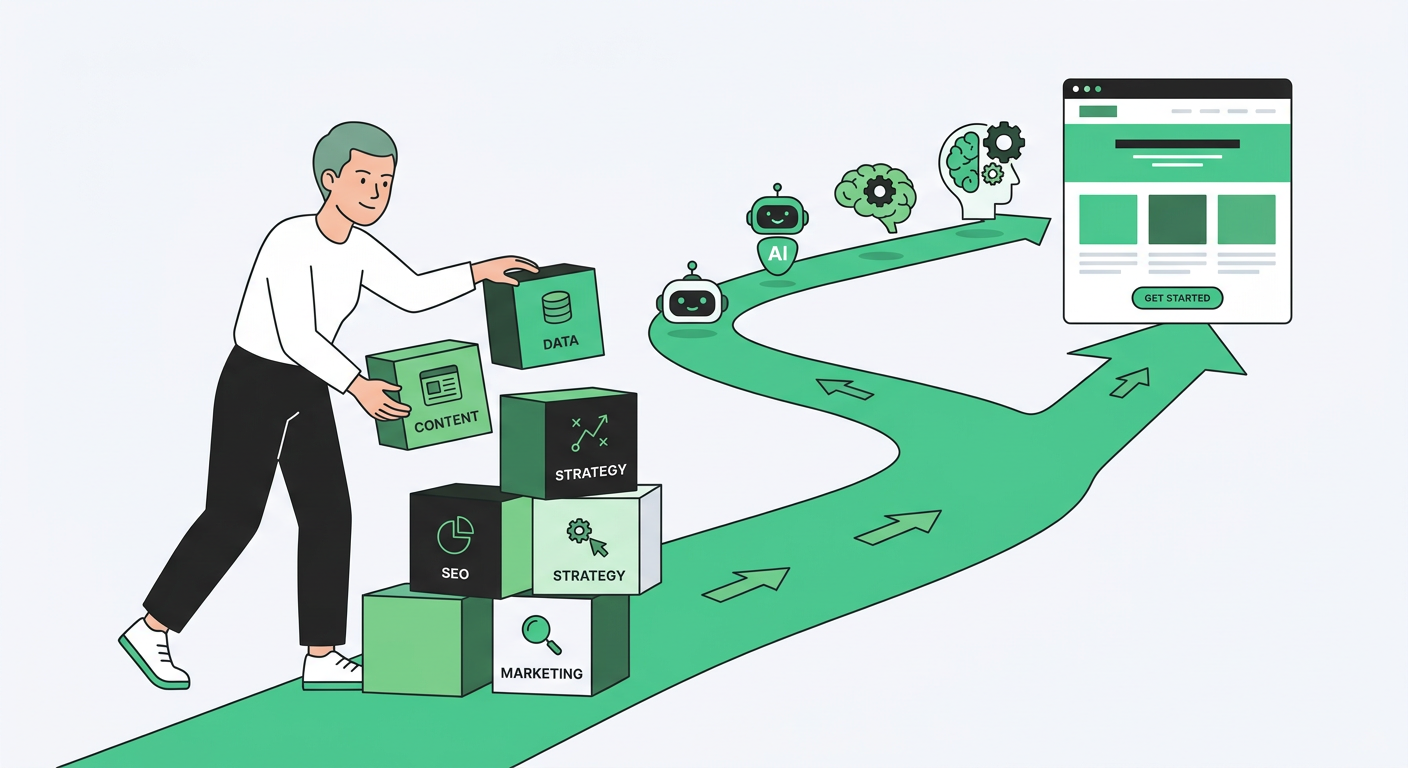
Here’s the thing. If you’re an early stage business, you don’t need a giant enterprise stack on day one. You need a simple, progressive system that shows what’s broken, what content to improve first, and how to build visibility without wasting money.
What Are AI Search Optimization Tools?
AI search optimization tools are platforms that help websites improve visibility in AI-powered answer systems and traditional search results. They usually analyze content clarity, topical depth, schema markup, crawlability, brand mentions, keyword coverage, prompt visibility, and technical SEO signals.
In plain English, they answer questions like:
- Can AI tools understand what your business does?
- Are your pages structured clearly enough to be summarized?
- Do you have enough authority around your main topics?
- Are your products, services, and expertise easy to verify?
- Which competitors show up in AI answers when you don’t?
This overlaps with SEO, but it’s not identical. Traditional SEO focuses heavily on rankings, traffic, backlinks, and keyword positions. AI visibility also cares about extractable answers, consistent brand entities, authoritative third-party mentions, and content that can be used confidently inside generated responses.
Google still recommends focusing on helpful, reliable, people-first content, and its helpful content guidance remains a smart foundation. But AI answer systems raise the bar. They don’t just need a page to rank. They need information that’s clear, specific, current, and trustworthy.
Why These Tools Matter for Early Stage Businesses
When you’re early stage, every content decision feels expensive. You might have limited pages, limited authority, and limited time. Guesswork hurts.
The right AI visibility tool gives you a practical map. Instead of publishing random blog posts and hoping Google or ChatGPT notices, you can see which terms, questions, and content gaps matter most.
For example, a local service business might learn that AI tools understand its services but not its location coverage. An eCommerce brand might discover product pages are missing structured product data. A consultant might find that competitors are mentioned because they have clearer comparison pages, better author bios, or stronger topical clusters.
That’s why Day 5 of a progressive content strategy is a great time to evaluate tools. By now, you’ve likely defined your audience, clarified core topics, and started building basic content. The next step is measurement. You need to know what’s working before you scale.
The Core Jobs AI Search Optimization Tools Should Handle
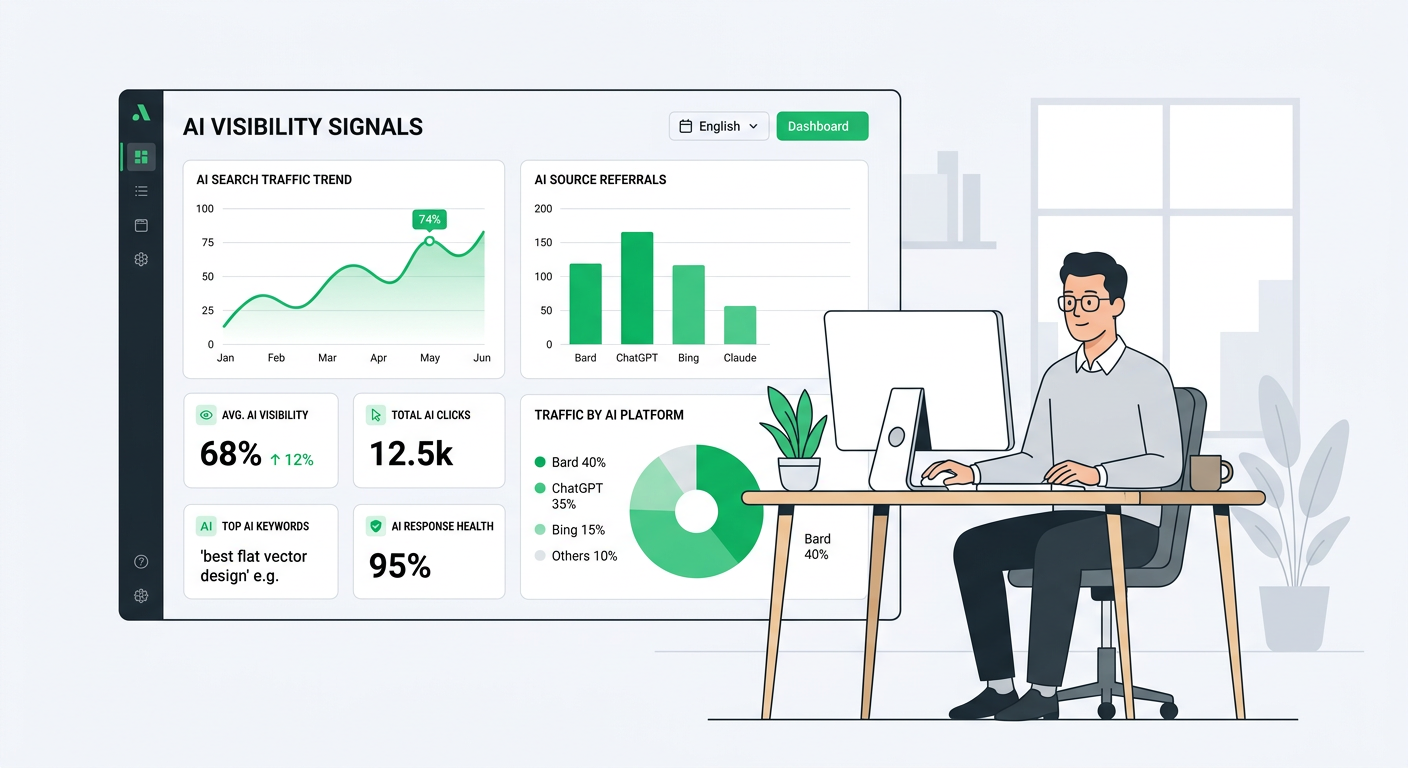
Not every platform does the same thing. Some are built for SEO audits. Others track AI mentions. Others help with content planning or technical structure. For a small business, the best setup usually covers six core jobs.
AI Visibility Auditing
Start with an audit. You need to know whether your site is easy for AI systems to understand.
A good AI website audit should check:
- Brand clarity
- Topic coverage
- Search intent match
- Answer-friendly formatting
- Author and trust signals
- Internal links
- External source quality
- Schema markup
- Content freshness
- Crawlability
You can use Marvlus to run a free AI website audit and identify gaps across AI visibility and SEO. It’s built for website owners, entrepreneurs, and marketers who want simple action steps instead of a confusing technical report.
Keyword and Topic Mapping
AI search is more conversational, but keywords still matter. They’re just not enough by themselves.
You need to map keywords to topics, questions, entities, and buyer intent. For example, “best CRM for contractors” is not just a keyword. It contains an audience, a product category, a comparison intent, and a buying journey.
A keyword mapping tool should help you:
- Assign one primary topic to each page
- Avoid keyword cannibalization
- Build supporting articles around main service pages
- Find long-tail questions people ask AI assistants
- Create clusters that build topical authority
For this stage, Marvlus offers keyword tracking and keyword analysis tools that fit well into a lightweight growth workflow.
Content Structure Optimization
AI systems favor content that’s easy to parse. That doesn’t mean robotic writing. It means clean headings, direct answers, short summaries, useful lists, and clear definitions.
The best content tools help you improve:
- Opening summaries
- Question-based headings
- Definitions
- Comparison sections
- FAQ blocks
- Step-by-step instructions
- Internal linking
- Source-backed claims
Google’s structured data documentation explains how schema can help search engines understand page meaning. For AI visibility, structured data is not magic, but it supports clarity when paired with strong on-page content.
AI Mention Tracking
Once your content is live, you need to know whether AI tools are mentioning your brand, your competitors, or nobody at all.
Tools like Ahrefs Brand Radar and Semrush AI Visibility features focus on tracking brand presence across AI-powered platforms. These can be useful when you’re ready to benchmark competitors, monitor share of voice, and spot prompts where you should appear.
For early stage companies, don’t overcomplicate this. Track a small set of commercial prompts first, such as:
- Best software for your niche
- Top agencies in your category
- Your brand versus competitor
- How to solve a specific customer problem
- Best local provider for your service
Technical SEO and Crawlability
If AI systems and search engines can’t access your content, they can’t use it. Technical SEO still matters a lot.
Your tool stack should help you check:
- Indexing problems
- Broken links
- Slow pages
- Missing titles and meta descriptions
- Duplicate content
- JavaScript rendering issues
- Robots.txt rules
- XML sitemaps
- Canonical tags
OpenAI’s publisher and developer FAQ notes that website owners may need to make sure the relevant crawler can access their pages. Bing also offers an AI Performance report inside Bing Webmaster Tools for understanding how content appears in Microsoft AI experiences.
Competitive Gap Analysis
A strong AI search optimization workflow should show why competitors appear where you don’t.
Look for gaps like:
- They have clearer category pages
- They answer more beginner questions
- They have stronger comparison content
- They earn more third-party mentions
- They use better product or service schema
- They publish more original examples
- They include better author credibility
This is where AI visibility becomes practical. You’re not chasing mysterious algorithms. You’re improving the signals that make your brand easier to understand and trust.
The Best Types of Tools to Use First
If you’re a startup, creator, local business, or small eCommerce brand, don’t buy every shiny tool. Build your stack in layers.
Start With an AI Website Audit Tool
Begin here because an audit tells you what’s broken. It’s the fastest way to spot simple wins, like vague page titles, weak intros, missing FAQs, thin service pages, or unclear brand messaging.
Use Marvlus’ free AI website audit to identify AI visibility gaps, SEO issues, and growth opportunities. This is especially useful if you’re not ready for a full agency engagement or a large monthly platform.
Add Keyword Tracking Next
Once you know your site’s baseline, track your most important keywords. Focus on money terms and educational terms.
Money terms include service, product, and comparison queries. Educational terms include definitions, tutorials, and beginner guides. Together, they help you build both traffic and trust.
If you’re still defining your content plan, read the Marvlus guide on AEO vs SEO to understand how answer engine optimization fits with traditional rankings.
Use AI Mention Tracking When You Have Enough Content
AI mention tracking is powerful, but it’s more useful once you have content worth measuring. If your site has only three pages, the tool will mostly confirm that you’re invisible.
A better sequence is:
- Fix technical and content basics
- Build core service or product pages
- Publish supporting educational articles
- Add comparison and FAQ content
- Then track AI mentions and competitor prompts
This keeps your spending aligned with growth stage.
Add Content Optimization Tools Carefully
AI writing tools can help draft outlines, summarize ideas, and speed up production. But don’t let them produce generic posts with no experience, examples, or point of view.
The content that wins in AI answers usually has something specific:
- A clear definition
- A useful framework
- First-hand experience
- Original examples
- Transparent sources
- Updated details
- Strong internal context
In other words, tools can help. They can’t replace judgment.
A Simple Day 5 Workflow for AI Visibility
By Day 5 of your early stage content strategy, your goal is not to dominate every AI platform. Your goal is to create a repeatable system.
Step 1: Pick One Commercial Topic
Choose one topic tied directly to revenue. Don’t start with a broad informational phrase if your site needs leads or sales.
Good examples:
- “Best bookkeeping software for freelancers”
- “Emergency plumber in Austin”
- “AI SEO tool for small businesses”
- “Organic skincare brand for sensitive skin”
This topic becomes your first visibility test.
Step 2: Audit Your Existing Page
Run your page through an AI search optimization tool and look for obvious gaps. Is the page clear? Does it answer the main question? Does it explain who the product is for? Does it include proof?
Fix the basics before creating more content.
Step 3: Build a Supporting Cluster
Create three to five related articles that support the main page. For example, if your main page targets “AI SEO tool for small businesses,” supporting articles could cover:
- What is AI visibility?
- AEO vs SEO
- How to get mentioned by ChatGPT
- Best content formats for AI answers
- How topical authority works
Marvlus has a helpful article on how to get mentioned by ChatGPT that fits naturally into this kind of cluster.
Step 4: Add Answer-Friendly Sections
Each page should include direct, useful sections that AI systems can understand quickly.
Use patterns like:
- “What is it?”
- “How does it work?”
- “Who is it for?”
- “Pros and cons”
- “Best use cases”
- “Step-by-step process”
- “Common mistakes”
This helps humans skim and helps AI tools extract meaning.
Step 5: Track, Improve, Repeat
After updates are live, monitor rankings, impressions, AI mentions, and conversions. Don’t judge the whole strategy from one prompt or one week. AI results can vary, so look for patterns over time.
How to Choose the Right Tool for Your Business
The best tool depends on your stage, budget, and goals.
If You’re Just Starting
Choose a simple audit and planning tool. You need clarity, not complexity.
Look for:
- Free or low-cost audits
- Plain-English recommendations
- SEO and AI visibility checks
- Keyword planning
- Task management
- Easy reporting
This is where Marvlus is a strong fit for small teams and solo website owners.
If You Already Have Traffic
Add more advanced tracking. You’ll want to compare rankings, prompts, competitors, and brand mentions across multiple platforms.
Look for:
- AI mention monitoring
- Competitor comparisons
- Custom prompt tracking
- Content gap reports
- Historical trends
- Integration with Google Search Console
If You Run an eCommerce Store
Prioritize product clarity. AI shopping experiences increasingly rely on clean product data, current availability, reviews, images, and clear descriptions. OpenAI’s shopping guidance explains how ChatGPT can show product options when users have shopping intent.
For eCommerce, make sure your tool checks:
- Product schema
- Pricing and availability
- Product descriptions
- Review signals
- Category structure
- Image alt text
- Merchant feeds where relevant
If You’re an Agency
You need reporting, repeatable audits, and client-friendly language. A tool that produces simple reports can help you prove value without drowning clients in jargon.
Look for:
- White-label reports
- Lead capture audit tools
- Multi-site management
- Client progress tracking
- Clear task lists
- Before-and-after visibility metrics
Common Mistakes to Avoid
Buying Tools Before Fixing Strategy
A tool won’t save a vague offer. If your homepage doesn’t clearly say who you help, what you do, and why you’re credible, AI systems will struggle too.
Tracking Too Many Prompts
Start small. Track 10 to 20 high-intent prompts before expanding. Quality beats volume.
Ignoring Traditional SEO
AI optimization doesn’t replace SEO. It builds on it. You still need crawlable pages, fast loading, helpful content, good links, and clear site architecture.
Publishing Generic AI Content
Generic content blends into the noise. Add examples, opinions, product details, use cases, data, and real experience. That’s what gives AI systems a reason to mention you.
Forgetting Brand Consistency
Your brand name, services, author names, locations, and product categories should be consistent across your site, social profiles, business listings, and third-party mentions.
FAQ
What is the difference between SEO tools and AI search optimization tools?
SEO tools focus on rankings, keywords, backlinks, technical audits, and organic traffic. AI search optimization tools also look at whether AI answer systems can understand, summarize, and mention your brand in conversational responses.
Do small businesses really need AI visibility tools?
Yes, but they should start simple. A small business doesn’t need an enterprise setup right away. An AI website audit, keyword tracking, and basic content improvements are usually enough to create early momentum.
Can AI search optimization tools guarantee mentions in ChatGPT or Google AI Overviews?
No tool can guarantee placement in AI answers. What tools can do is improve the signals that make your site easier to access, understand, and trust.
How often should I audit my website for AI visibility?
For an early stage business, a weekly or biweekly audit is practical if you’re actively publishing or updating pages. If your site changes less often, monthly audits may be enough.
What should I optimize first for AI visibility?
Start with your highest-value pages. Improve your homepage, service pages, product pages, and best educational articles before scaling into large content production.
Are keywords still important for AI search?
Yes. Keywords still reveal demand and intent. The difference is that you should connect keywords to topics, questions, entities, and complete answers instead of repeating phrases mechanically.
What metrics should I track?
Track keyword rankings, organic traffic, conversions, AI mentions, competitor presence, indexed pages, content updates, and lead quality. No single metric tells the full story.
Build Your AI Visibility Foundation Today
If you want a simple way to see how AI tools understand your website, start with a free audit from Marvlus. You’ll get clear recommendations for improving AI visibility, SEO structure, content quality, and growth opportunities without needing a technical background.
Don’t wait until competitors own the AI answers in your market. Build the foundation now, improve one page at a time, and create a content system that compounds.
Conclusion
AI search optimization tools are no longer just nice-to-have software for big brands. They’re becoming part of the basic marketing stack for website owners, entrepreneurs, bloggers, eCommerce stores, agencies, and small businesses that want to stay visible as discovery changes.
The smartest move is to keep it practical. Audit your site, map your topics, improve your most valuable pages, track the prompts that matter, and build trust signals over time. Do that consistently, and your website becomes much easier for both people and AI systems to understand, recommend, and choose.