
If you’ve been hearing people toss around SEO and AEO like they’re twins, here’s the truth, they are related, but they are not the same game. One helps you win visibility in traditional search results, the other helps you win visibility in answer engines and AI-powered search experiences.
That difference matters a lot right now. If you run a website, sell services, publish content, or manage a brand, understanding AEO vs SEO can help you make better decisions about what to optimize first, what to write next, and where your traffic is actually coming from.
What SEO Means
SEO stands for search engine optimization. In plain English, it is the practice of improving your website so it shows up higher in search results when people search on Google, Bing, and other search engines.
SEO usually focuses on a few core things:
- Keyword targeting
- Content quality
- Backlinks
- Site speed
- Technical structure
- Mobile usability
- Internal linking
The goal is simple, earn clicks from people searching for information, products, or services. If you want a deeper overview of how modern search signals fit together, Marvlus has useful guidance on AI visibility and SEO that shows how content, keyword mapping, and auditing work together.
What AEO Means
AEO stands for answer engine optimization. It is the practice of making your content easy for AI tools and answer engines to understand, extract, and cite when users ask questions.
Think of it like this, SEO helps you get found in a library catalog, AEO helps your page become the page the assistant actually reads out loud.
AEO often focuses on:
- Direct answers
- Clear definitions
- Question-based headings
- Structured formatting
- Semantic relevance
- Entity clarity
- FAQ content
The real shift is that users are no longer only typing short keywords into a search box. They are asking full questions in ChatGPT, Gemini, Perplexity, voice assistants, and AI summaries inside search results.
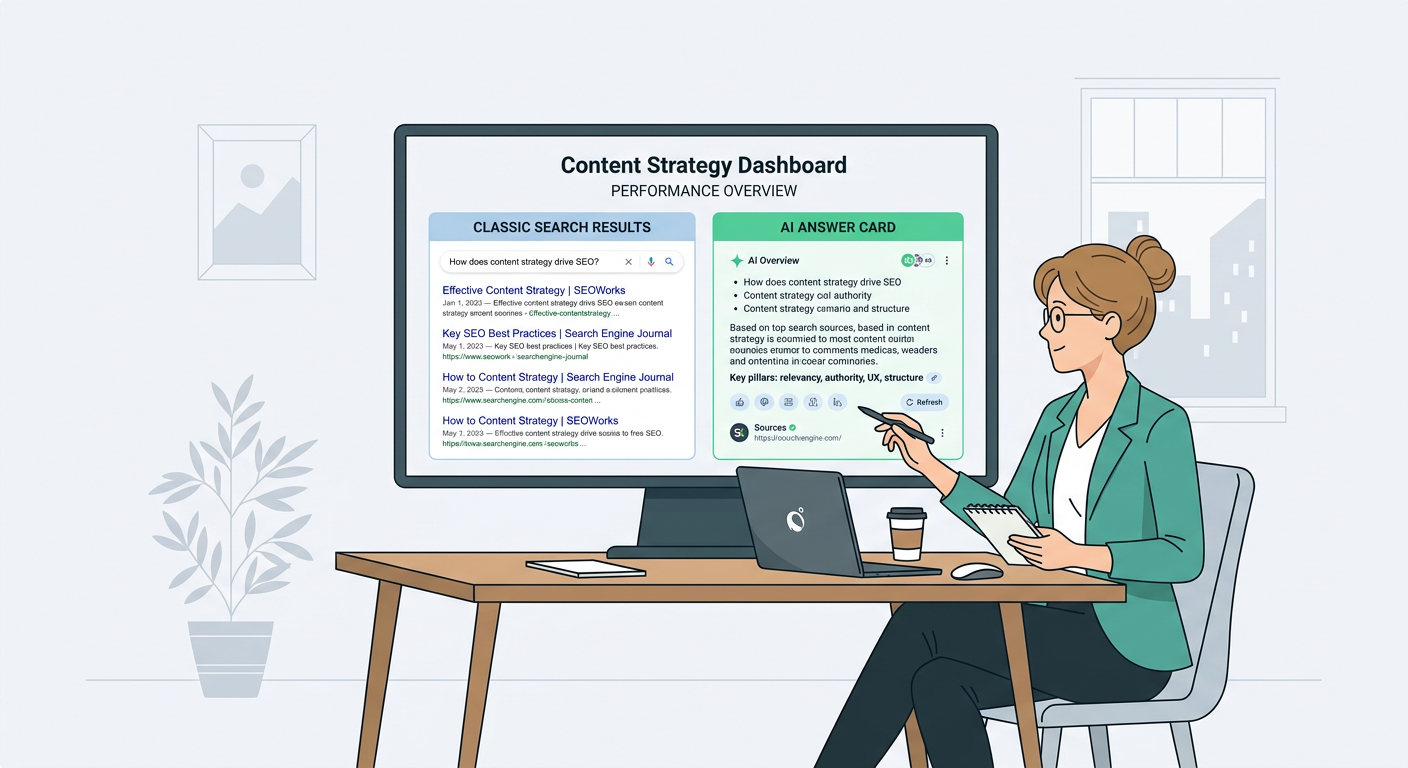
AEO vs SEO, The Core Differences
Here’s the easiest way to think about it, SEO is built for rankings, AEO is built for answers.
1. Search intent versus answer intent
SEO cares a lot about matching intent, but AEO pushes that further by asking, “Can this page answer the question fast and clearly?”
2. Clicks versus citations
SEO success often means more clicks from search results. AEO success can mean your content gets quoted, summarized, or referenced inside an AI answer, even if the user never visits every source page.
3. Keywords versus entities
SEO still uses keywords heavily. AEO relies more on entities, context, and relationships between topics, which is why topical depth matters so much.
4. Ranking pages versus extracting passages
Traditional SEO tries to rank the page. AEO often pulls the best passage, definition, or answer from the page.
5. SERP optimization versus answer engine optimization
SEO is about the search engine results page. AEO is about being useful inside AI-generated answers, snippets, voice responses, and other zero-click experiences.
Why AEO Is Growing Fast
People want faster answers. AI tools are getting better at summarizing the web. Search engines are also blending more direct answer formats into results, which means the old “10 blue links only” world is fading.
That does not mean SEO is dead. It means SEO is expanding. If you want search visibility in 2026 and beyond, you need content that works for both humans and machines.
Google has publicly continued to evolve search with AI experiences and helpful content systems, while OpenAI and other answer engines are changing how people consume information. For a practical perspective on how AI search and SEO signals overlap, Marvlus’s consulting page highlights technical and content SEO audits alongside AI search visibility.
How SEO and AEO Work Together
The best strategy is not choosing one over the other. It is stacking them.
SEO gives you the foundation
Without technical health, strong pages, and crawlable content, your site will struggle no matter how clever your answer formatting is.
AEO gives you future-proof visibility
If your content is easy to extract, summarize, and trust, you improve your chances of showing up in AI answers and voice search.
Together they improve topic authority
The more complete your coverage, the more likely you are to rank in traditional search and appear in answer-driven surfaces.
That is why topical clusters, semantic SEO, and clean site structure matter so much. They help both search engines and answer engines understand what you actually know.
What to Optimize for SEO
If SEO is your priority, focus on these basics first:
Keyword research
Find terms people actually search for, then map them to pages with clear intent.
On-page optimization
Use strong titles, meta descriptions, headers, and internal links that support the topic.
Technical SEO
Make sure your site is fast, crawlable, secure, and mobile-friendly.
Link building
Earn relevant backlinks from reputable sites to strengthen trust and authority.
Content depth
Create pages that fully cover the topic instead of writing thin posts that barely scratch the surface.
If you want a smarter content system, Marvlus’s keyword mapping and tracking tools are built for organizing topics and turning them into a clearer growth plan.
What to Optimize for AEO
If AEO is your priority, shift your content style a bit.
Answer the question early
Lead with the answer near the top of the section, not three paragraphs later.
Use natural language
Write like a helpful expert, not like a keyword machine.
Add definitions
Short, precise definitions are easy for AI systems to extract.
Use FAQs
FAQ sections mirror the way people ask questions in AI tools.
Make your structure obvious
Clear headings, bullets, lists, and summaries help models understand your content faster.
Build entity clarity
Mention related concepts, brands, tools, and topics in a way that shows real depth.
Marvlus also calls out several AI visibility signals, including related keyword use, topic coverage, clear writing style, and structured FAQ sections, which are all highly relevant to AEO-style content. (marvlus.ai)
A Simple Framework for Early Stage Businesses
If you are early stage, do not overcomplicate this.
Start with SEO basics
Make sure your site is technically healthy and your pages target real search demand.
Add AEO-friendly formatting
Turn key pages into question-answer content with clear sections, summary paragraphs, and FAQ blocks.
Build topic clusters
Pick one core topic, then create supporting pages around it so your site looks like an expert, not a one-post wonder.
Audit your pages regularly
Search behavior changes, and so do AI systems. What worked last year may need a refresh.
Marvlus positions its audits around both SEO and AI visibility, which is useful if you want one workflow that helps you see content gaps without drowning in overly complex dashboards. (marvlus.ai)
Common Mistakes People Make
Trying to chase AEO without SEO
If your site is weak technically, answer formatting alone will not save it.
Writing generic content
AI systems are good at noticing thin, repetitive, or overly broad pages.
Stuffing keywords
This makes content awkward for humans and less trustworthy for systems trying to extract meaning.
Ignoring structure
A wall of text is hard for users and AI to process.
Forgetting the business goal
Traffic is nice, but what you really want is leads, sales, signups, and brand trust.
How Marvlus Fits Into This Strategy
If you are trying to improve both search rankings and AI visibility, Marvlus is positioned around exactly that overlap. The platform describes itself as a simple and affordable way to improve AI visibility and SEO, with features for audits, keyword mapping, competitor research, and blogging workflows. (marvlus.ai)
That matters because early stage businesses usually do not need ten different tools. They need clarity, priorities, and a way to fix the right things first.
FAQ
Is AEO replacing SEO?
No. AEO is expanding the playbook, not replacing SEO. SEO still matters for crawlability, rankings, and traffic, while AEO helps your content show up in AI answers and direct response surfaces.
What is the biggest difference between AEO and SEO?
SEO focuses on ranking pages in search results. AEO focuses on making content easy for AI systems and answer engines to extract and cite.
Can one page do both SEO and AEO well?
Yes. In fact, the best pages usually do both. They target a real search term, answer the main question quickly, and include deeper context for users who want more detail.
Do small businesses need to care about AEO?
Absolutely. Smaller brands can win by creating clearer, more useful content than bigger competitors. That is especially true in AI-driven search, where clarity and relevance matter a lot.
What type of content is best for AEO?
Definitions, how-to guides, comparison pages, FAQ pages, and any page that answers a common question clearly and directly.
How do I know if my content is AEO-friendly?
Ask yourself if someone could understand the main answer in the first few lines, and if an AI system could easily summarize the page without guessing. If not, it probably needs work.
Better Next Steps For Your Website
If you want more traffic now and more AI visibility later, stop thinking of SEO and AEO as rivals. They are teammates.
Build pages that rank, then shape them so they answer questions cleanly. That is where the opportunity is hiding, and it is a big one for businesses that move early.
If you want help turning that strategy into action, start with a free website audit at Marvlus. It is a simple way to see where your content stands and what to improve next.
Conclusion
The short version is this, SEO helps people find your website, and AEO helps answer engines understand and use your content. You do not need to pick a side, you need a strategy that works in both worlds.
For early stage businesses, that means clear writing, strong topic coverage, smart keyword mapping, and content built for real people first. Get that right, and you are not just chasing rankings, you are building visibility that can last.