
If you want ChatGPT to mention your brand, your page needs to feel like the easiest possible answer. That means clear language, strong structure, and enough trust signals that an AI system can confidently lift your content without second-guessing it. Think of it like making your website the cleanest sign on a crowded highway.
The good news is that you do not need magic. You need the kind of content machines can read fast and humans actually want to share. ChatGPT can produce cited answers when it uses search, but it can also hallucinate or miss weak sources, so the job is to make your page both useful and easy to verify. OpenAI says ChatGPT can fabricate citations, and that search-based responses are more likely to include inline citations to real sources. (help.openai.com)
What It Actually Means to Be Cited by ChatGPT
When people say they want to be cited by ChatGPT, they usually mean one of two things. Either they want ChatGPT to mention their brand or article as a source in a web-search answer, or they want their content to be visible enough that ChatGPT’s retrieval layer chooses it during a query.
That distinction matters. ChatGPT’s standard model behavior comes from training data and patterns, while search-enabled answers can pull from current web sources and display citations. OpenAI explains that search responses can show inline citations and source panels, and that ChatGPT can also still make mistakes if the source is weak or the model misreads it. (help.openai.com)
So, the real goal is not just “rank in ChatGPT.” It is to make your page a high-confidence source that is:
- easy to crawl
- easy to understand
- easy to quote
- easy to trust
- easy to match to a user’s question
The 7 Things ChatGPT Seems to Reward
1) Clear answers near the top
If your page buries the answer in paragraph seven, you are making the AI work too hard. Strong pages answer the main question early, then expand with supporting detail.
A good rule is simple. State the answer in the first 40 to 80 words, then back it up with examples, definitions, and specifics.
2) Topic depth instead of thin content
ChatGPT tends to do better with pages that cover a topic thoroughly. That means subtopics, related terms, common objections, and follow-up questions all belong on the same page.
Marvlus calls this topic coverage and depth, and it makes sense. If your page leaves people hanging, an AI system is more likely to skip it for something more complete. (marvlus.ai)
3) Clean structure
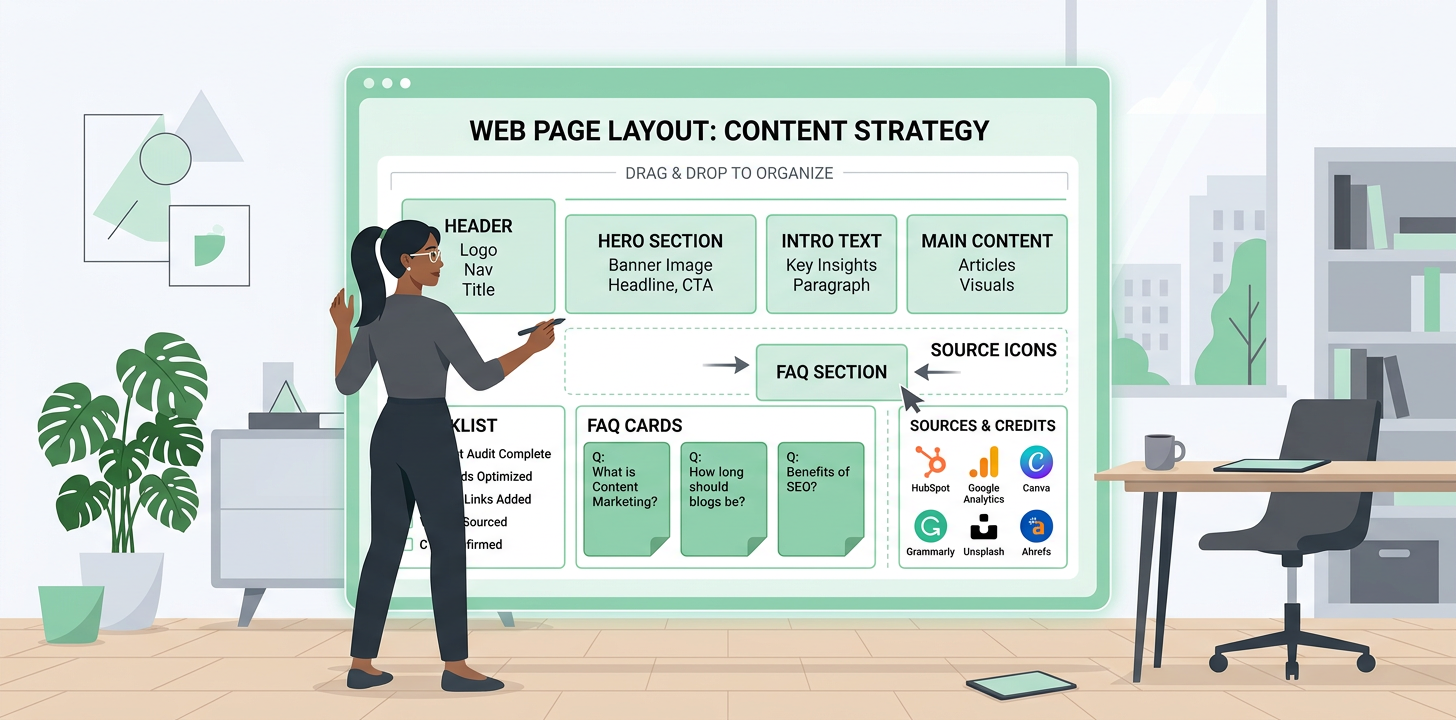
Headings, short sections, bullet points, FAQs, and summaries help AI systems extract meaning quickly. A page that reads like a long foggy essay is harder to reuse than one that feels neatly labeled.
4) Entity clarity
Use specific names, concepts, and related terms. If you are writing about AI visibility, say AI visibility, answer engine optimization, generative engine optimization, search visibility, and semantic SEO where relevant.
That helps the model understand what your page is actually about, not just what word appears the most.
5) Strong sourcing
If you reference facts, link to primary or authoritative sources. OpenAI’s own guidance encourages users to verify important info and notes that search-based answers can include cited sources. (help.openai.com)
6) Freshness
Old pages can still rank, but stale pages are easier to ignore. If your article contains outdated stats, broken links, or old screenshots, it loses trust fast.
7) Crawlability
If your site blocks search bots or hides important content behind scripts, you are asking for trouble. OpenAI notes that sites need to allow OAI-Searchbot to crawl them for inclusion in search-based experiences. (help.openai.com)
How to Structure a Page That ChatGPT Can Cite
Start with a direct definition
Begin with one short paragraph that explains the topic in plain English. No fluff, no dramatic buildup, no inside jokes.
For example, if your topic is “how to get cited by ChatGPT,” your opening should immediately define what citation means, why it happens, and what the page will help the reader do.
Use question-style headings
A heading that mirrors user intent is a gift to AI systems. Questions like “What makes a page citation-worthy?” or “How do I improve my chances of being cited?” map closely to natural search behavior.
Add a short summary after each section
Think of these as mini takeaways. They make your page easier to skim for humans and easier to extract for machines.
Include an FAQ block
FAQ sections are especially strong because they mirror conversational queries. Marvlus explicitly recommends structured FAQ sections as one of the best formats for AI visibility. (marvlus.ai)
Make your content stand alone
Every section should make sense even if it is lifted out of the article. That means no vague “as mentioned above” references that depend on a lot of context.
On-Page SEO Moves That Help AI Citations
Put the main keyword in the title and intro
Do it naturally, not like a robot stuffing a suitcase. The page should clearly signal what it solves.
Add related terms throughout the article
Use synonyms and nearby concepts. For this topic, useful variations include:
- AI citations
- ChatGPT search visibility
- answer engine optimization
- generative engine optimization
- semantic SEO
- topical authority
- featured snippet optimization
Strengthen internal linking
If you have supporting content on your site, link to it. Internal links help both users and crawlers understand how your content cluster fits together. Marvlus also highlights helpful internal links as a visibility signal. (marvlus.ai)
Use schema where it fits
Schema does not guarantee citations, but it can help search engines understand your page type. FAQ schema, article schema, and author schema are especially useful for clarity.
Show author credibility
Put a real name, bio, and relevant experience on the page. The more your content looks like it came from an informed human, the better.
What To Publish If You Want More AI Mentions
Here’s the thing, not every page is equally cite-friendly. Some content types are just better at earning AI attention.
Best-performing page types
- glossary definitions
- how-to guides
- comparison pages
- statistics roundups
- checklists
- step-by-step tutorials
- FAQ hubs
- original research summaries
Why these formats win
They are organized, easy to summarize, and answer a specific question fast. That makes them attractive to both search engines and AI answer systems.
If you want a simple shortcut, build topic clusters around problems your audience already asks about. For example, one pillar page could target “how to get cited by ChatGPT,” with supporting pages on AI visibility, semantic SEO, and answer engine optimization.
A Simple Content Formula You Can Use Today
Here is a very practical structure you can copy:
- Define the topic in the opening paragraph.
- Explain why it matters.
- Break down the key factors.
- Show step-by-step actions.
- Add examples and mistakes to avoid.
- End with an FAQ section.
- Include a clear next step.
That structure is boring in the best possible way. It gives the model a clean path through the page, and it gives the reader confidence that you know what you are talking about.
Common Mistakes That Kill Citation Potential
Writing like a mystery novel
If your answer takes too long to arrive, people bounce. AI systems feel that friction too.
Overstuffing keywords
If every line sounds forced, the content looks synthetic and less trustworthy.
Hiding the answer in a giant wall of text
Long paragraphs without subheads are tough for both readers and machines.
Using weak or no sources
Claims without evidence are easy to ignore.
Publishing once and never updating
Stale content gets stale trust. Refresh your best pages regularly.
A Better Way to Think About ChatGPT Citations
Instead of asking, “How do I trick ChatGPT into citing me?” ask, “How do I become the most useful, clearest, most trustworthy answer on this topic?” That shift changes everything.
ChatGPT is not looking for cleverness. It is looking for confidence. And confidence comes from structure, clarity, authority, and relevance.
Marvlus builds around that exact idea, with audits for AI visibility, keyword mapping, topic coverage, and content structure. If you are early in your journey, that kind of diagnostic approach can save you a lot of guesswork. (marvlus.ai)
FAQ
Can ChatGPT cite my website directly?
Yes, but usually only when it is using search or a similar retrieval feature. OpenAI says search-enabled responses can include inline citations and source panels, and that sites must be crawlable for inclusion. (help.openai.com)
Do backlinks help you get cited by ChatGPT?
They can help indirectly because strong backlinks often correlate with authority and visibility. But citation potential is usually driven more by content clarity, trust, and topical relevance than by backlinks alone.
Is FAQ schema important?
It can help by making your page easier for machines to interpret. It is not a guarantee, but it is a smart move for AI-friendly content.
Should I write longer content to get cited?
Longer is not automatically better. Better organized and more complete usually wins.
What kind of pages are easiest for ChatGPT to cite?
Pages that answer one clear question, use concise structure, and include reliable sources are typically the easiest to reuse.
How often should I update content for AI visibility?
Update your most important pages whenever facts change, and review them regularly for freshness, broken links, and better clarity.
Can Marvlus help with this?
Yes. Marvlus focuses on AI visibility, SEO audits, keyword mapping, topic coverage, and content structure, which are all useful for making pages more citation-friendly. (marvlus.ai)
Grow Your AI Visibility Faster
If you want more ChatGPT mentions, start by fixing the content that already matters most on your site. Run an audit, tighten your structure, strengthen your topical coverage, and make every important page easier to understand in seconds.
If you want help turning that into a repeatable system, start with a free AI website audit at Marvlus. It is a simple way to spot the gaps that keep your content out of AI answers and search visibility.
Conclusion
Getting cited by ChatGPT is not about gaming the model. It is about building pages that are so clear, useful, and trustworthy that they become the obvious answer.
If you focus on structure, topical depth, credible sourcing, and consistent updates, you give your content a real shot at being surfaced in AI-driven search. That is the game now, and it is very winnable for smart website owners.