Content optimization software should make your publishing process clearer, not leave your team chasing a score that has little connection to leads, rankings, or client results. That’s why many website owners and agencies are looking beyond Surfer SEO alternatives that merely recommend terms and word counts.
Surfer remains a capable platform for teams that want structured on-page guidance, AI writing support, and AI visibility features in one product. Its annual Discovery plan is listed at $49 per month, while larger plans add more content capacity, page tracking, and reporting features. Still, a different tool may be a better match if your priority is clean editorial workflows, site-wide topic planning, client reporting, publishing automation, or visibility in AI answers.
The Best Surfer SEO Alternatives at a Glance
The right replacement depends on where your workflow slows down. Some tools help writers refine drafts, while others help us plan topical coverage, monitor published pages, or explain performance to clients.
| Tool | Best For | Starting Point | Standout Strength |
|---|---|---|---|
| Clearscope | Editorial teams | $129 per month | Clean, writer-friendly grading |
| Frase | Content production teams | $39 per month annually | Research, writing, publishing, monitoring |
| MarketMuse | Large content libraries | Demo-led pricing | Topic planning and personalized difficulty |
| Semrush | Broad SEO operations | Varies by plan | Keyword, competitor, and technical toolset |
| Marvlus | SEO and AI visibility planning | Free audit available | Audits, topical maps, AI mention tracking |
Pricing and feature limits change frequently, so confirm the current plan details before making a purchase. For example, Surfer’s pricing page lists annual Discovery pricing at $49 per month, while Frase’s pricing page lists its Starter tier at $39 per month on annual billing.
What a Strong Alternative Should Actually Solve
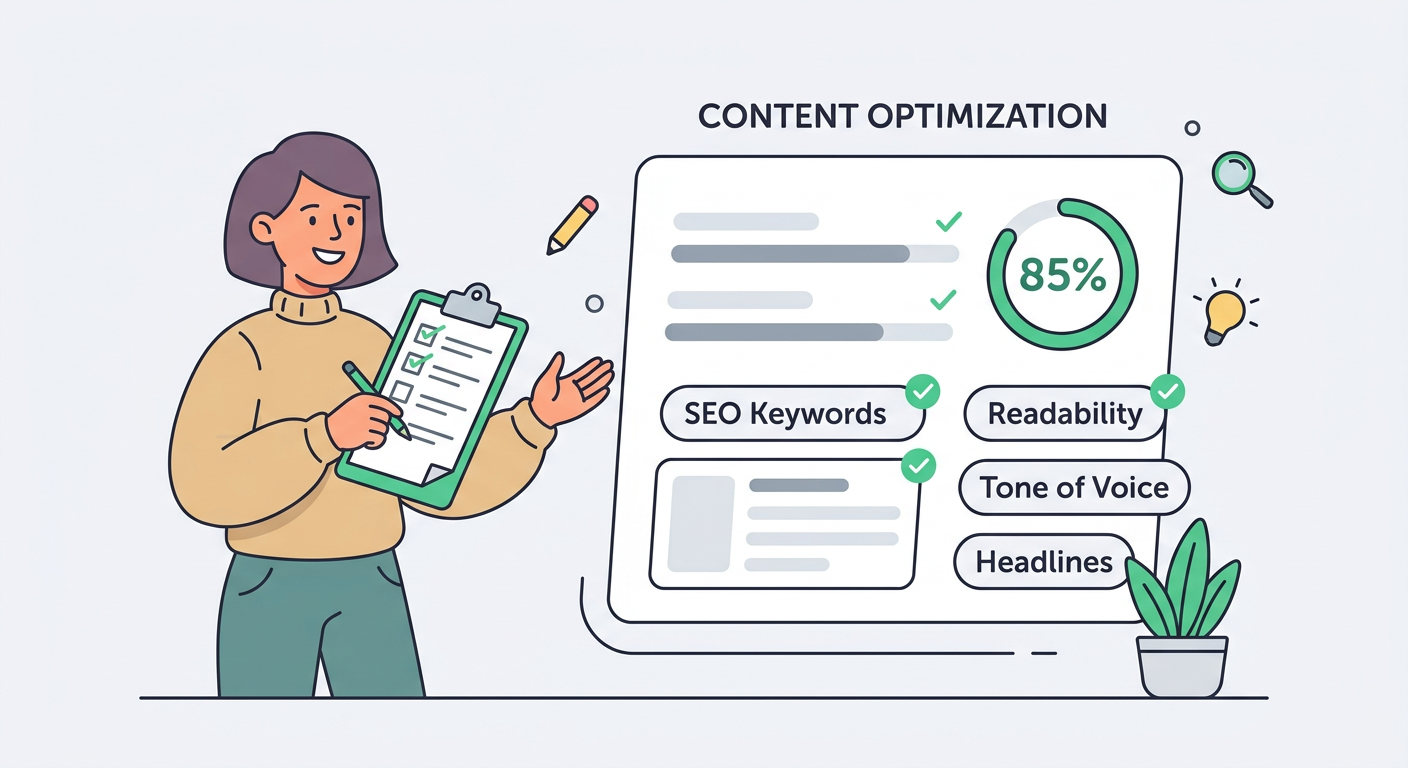
A good Surfer replacement should improve decisions before and after the draft, not just provide a real-time content score. We recommend looking at the entire operating system around your content, including planning, publishing, measurement, and reporting.
Content scoring is useful, but it is not the strategy
A score can help a writer spot missing subtopics, unclear structure, or incomplete coverage. But it cannot decide whether the keyword matches commercial intent, whether the page overlaps with an existing article, or whether the topic is worth owning in the first place.
The strongest teams use optimization recommendations as a quality-control layer. They still start with audience needs, first-hand experience, sales objections, product positioning, and a clear page purpose.
AI answer visibility needs its own measurement
More buyers are using AI tools to compare products, research services, and narrow down choices. A 2025 Pew Research Center report found that 34% of U.S. adults had used ChatGPT, roughly double the share reported in 2023.
That shift does not make Google rankings irrelevant. It means our content needs to be clear enough to rank in traditional results and useful enough to be understood, summarized, and recommended in AI-generated answers.
Agencies need repeatable client workflows
A tool can look impressive in a demo and still create administrative work every week. Agencies should assess user permissions, report exports, white-label options, multi-site limits, content approvals, and the clarity of recommendations before committing.
If a platform gives your strategist a long list of issues but no practical prioritization, your team still has to translate the data into a client-ready plan. That translation cost matters.
1. Clearscope for Editorial Simplicity
Clearscope is one of the strongest options for teams that want a polished writing environment and clear optimization guidance. Its interface is deliberately writer-friendly, which makes it easier to bring subject matter experts, freelancers, and editors into a consistent review process.
The regular Essentials price is listed at $129 per month and includes tracked prompts, pages, topic explorations, and draft capacity. Clearscope’s Surfer comparison page also positions the product around AI tracking and content inventory features.
Best fit
- Editorial teams that prioritize clean workflows
- Brands with experienced writers who do not need heavy automation
- Agencies that want a simple grading standard across contributors
Watch-outs
Clearscope is a premium choice when compared with entry-level alternatives. It is best when the editorial experience and consistency justify the higher monthly investment.
2. Frase for an End-to-End Content Loop
Frase is a strong option for teams that want research, drafting, optimization, publication support, and post-publication monitoring in one workflow. Its Starter tier is listed at $39 per month when billed annually, with one site, one seat, ten articles, and fifty audit pages per month.
The platform also includes SEO and GEO scoring, AI visibility checks, publishing options for WordPress, Webflow, Sanity, and Wix, plus content decay monitoring. That makes Frase especially attractive when we want fewer handoffs between planning, writing, publishing, and updating.
Best fit
- Lean in-house teams producing content regularly
- Agencies managing several predictable production workflows
- Website owners who want content monitoring after publication
Watch-outs
Frase has a broad feature set, so teams should set a simple internal process before enabling every automation. Start with one workflow, such as briefing and refreshing declining pages, then expand from there.
3. MarketMuse for Topic Planning Across Large Sites
MarketMuse is built for content strategy at scale. Its core advantage is not simply draft optimization, it is helping teams understand what a site already covers, where coverage is weak, and which topics make sense for that specific domain.
Its Inventory feature assesses published pages and topics, while Personalized Difficulty estimates how challenging a topic may be based on the authority and coverage of your own site. MarketMuse’s pricing page directs prospective customers to book a demo for paid plans and highlights its inventory, tracked topics, briefs, and strategy documents.
Best fit
- Established publishers with large content libraries
- Enterprise SEO teams planning topic clusters
- Agencies doing strategic content roadmaps for complex clients
Watch-outs
MarketMuse can be more than a smaller site needs. If you publish a handful of articles per month and lack a deep existing library, a simpler tool may produce faster value.
4. Semrush for Teams That Need a Wider SEO Stack
Semrush is a sensible alternative when content optimization is only one part of the job. Its broader platform supports keyword research, competitive analysis, site audits, rank monitoring, backlink work, and reporting, which can reduce the need to maintain several separate tools.
The tradeoff is focus. A wide toolkit can be powerful, but it may feel heavy for a writer who only needs a concise brief and a straightforward editorial checklist. We see Semrush as the better fit for SEO teams that already need data across technical, competitive, and content operations.
Best fit
- Full-service SEO agencies
- Teams managing technical SEO and content from one platform
- Businesses that need competitive research alongside content work
Watch-outs
Plan time for onboarding. A wide platform rewards teams that define ownership clearly, such as who handles audits, who owns keyword research, and who turns insights into pages.
5. Marvlus for SEO Priorities and AI Visibility Gaps
Marvlus is a practical choice when the goal is to turn site data into an ordered action plan across SEO and AI visibility. Rather than beginning with a blank document, we can assess the existing site, identify high-impact content gaps, build topical maps, track rankings, and monitor whether brands appear in relevant AI conversations.
For teams building a more connected content system, our guide to topical authority and content clusters explains why pillar pages, supporting pages, and internal links matter. The SEO sitemap workflow is also useful for turning a list of URLs into a prioritized improvement queue.
Best fit
- Website owners who need to know what to fix first
- Agencies that need actionable audits and client-facing workflows
- Teams measuring both rankings and AI brand visibility
Watch-outs
Marvlus works best when we act on its recommendations consistently. A site audit is the starting point, not the finish line. Assign owners, set review dates, and measure progress against a small group of high-value pages.
How We Choose Between Content Optimization Tools
We get better results when we choose a platform based on the bottleneck, not the longest feature list. Use these five questions to make a faster decision.
Do we need better drafts or better content decisions?
Choose a writer-led tool like Clearscope when the content strategy is already strong and your issue is editorial consistency. Choose a planning-led tool like MarketMuse when the bigger problem is deciding what to publish, refresh, consolidate, or retire.
Do we need to monitor pages after publication?
A page that performs well at launch can weaken as competitors publish stronger material or intent changes. Frase is particularly compelling for teams that want content monitoring and publishing capabilities connected to the production process.
Are AI answers part of the measurement plan?
If your prospects ask tools like ChatGPT, Gemini, Claude, or Perplexity for recommendations, measuring only keyword positions leaves a gap. Learn the difference between source visibility and brand recommendations in our breakdown of AI mentions and source links, then track prompts that match real buyer questions.
Can the tool support our client workflow?
Agencies should calculate cost per client, not just cost per seat. Include onboarding time, report creation, user limits, export quality, account permissions, and how easily junior team members can turn findings into useful work.
Will our team actually use it every week?
The best platform is the one that becomes part of the workflow. Run a small pilot with a real content project, define success before the trial begins, and have writers, strategists, and account managers test the product together.
A Sensible Migration Plan From Surfer
Switching tools does not require rebuilding your entire content process. We recommend migrating in phases so you can protect productive habits while replacing the parts that create friction.
- Document your current workflow. List where briefs originate, who writes, how content is reviewed, where it is published, and how results are reported.
- Export active projects. Save priority keywords, briefs, draft links, page lists, and tracking notes before a subscription ends.
- Choose one pilot category. Test the alternative on a focused set of pages, such as comparison pages, service pages, or a single content cluster.
- Measure operational outcomes. Track editing time, publication speed, ranking movement, content refreshes completed, and client feedback.
- Keep human review in place. No optimizer can replace product knowledge, original examples, fact checking, or a clear point of view.
This approach prevents a common mistake: changing platforms because a dashboard looks different, then discovering six weeks later that the real bottleneck was unclear briefs or slow approvals.
Frequently Asked Questions
Is Surfer still worth using?
Yes, Surfer can still be worth using for teams that value structured on-page guidance and want its mix of content optimization and AI visibility features. It is a strong fit when the platform matches your budget, content volume, and editorial workflow.
What is the most affordable Surfer alternative?
Frase is one of the more accessible full-workflow options, with annual Starter pricing listed at $39 per month. The least expensive option is not automatically the best value, so compare content limits, sites, users, and the work the platform removes from your process.
Is Clearscope better than Surfer for writers?
Clearscope is often the better fit for writers who want a clean, focused editing experience and straightforward content guidance. Surfer may be more suitable for teams that want a broader set of optimization and AI visibility features inside the same platform.
Can these tools guarantee first-page rankings?
No. Content software can help us improve relevance, structure, topical coverage, and workflow quality, but rankings also depend on authority, competition, technical performance, user satisfaction, and intent fit. Treat optimization scores as signals, not guarantees.
Do agencies need a separate tool for AI visibility?
Not always, but agencies should measure AI visibility if it affects how their clients are discovered and compared. A dedicated workflow is useful when clients need to know which prompts mention their brand, which competitors appear, and what content gaps are preventing visibility.
How long should we test a Surfer alternative?
Give a new platform at least one full content cycle, usually four to eight weeks. That is long enough to evaluate research quality, writer adoption, publishing handoffs, reporting, and whether recommendations produce useful changes.
See Where Your Content Has the Biggest Opportunity
If you want a clearer view of what is limiting rankings, topic coverage, and AI visibility, explore Marvlus. We help website owners and agencies turn audits, topical maps, AI mention tracking, and rank data into a practical list of next actions.
Start with your highest-value pages, prioritize the gaps that affect revenue or client outcomes, and create a workflow your team can repeat every month.
The Best Alternative Depends on the Work You Need Done
The strongest Surfer SEO alternative is not the one with the most recommendations on screen. It is the tool that helps us make better decisions, publish stronger pages, maintain what already works, and show results in language clients and stakeholders understand.
Clearscope is excellent for editorial clarity. Frase is compelling for an end-to-end production loop. MarketMuse earns its place in larger strategic programs. Semrush works well for broad SEO operations. And when we need to connect website audits, topic planning, rankings, and AI visibility into one prioritized system, Marvlus gives us a focused path forward.
Choose the bottleneck first, run a real pilot, and let the workflow, not the marketing claims, make the final decision.