
How to Start an SEO Company A Step-by-Step Guide
I’m Marvin Russell. 👋 This is the story of how I started an SEO company from my small apartment in Chicago and grew it to $120,000/month before exiting. Today I’m a 3x SaaS founder, Private Equity Portfolio Director, and Marketing Executive with a passion for launching and growing software companies.
Reading time: 25 minutes
Table of Contents
Chapter 1: Introduction
I wrote the original version of this guide many years ago.
At the time, I had just finished building and selling my SEO company. I wanted to document everything I had learned while it was still fresh in my mind, hoping it would help someone else avoid the mistakes I made.
I never expected so many people to read it.
Over the years, thousands of entrepreneurs have found the article while researching how to start an SEO company. Even today, people still search for it by name, send me emails, and mention it on podcasts and social media.
That’s one of the reasons I decided to update it.
The original guide is still filled with lessons I believe in. The stories are true. The strategies worked. Many of them still do.
But search has changed.
When I started my agency, success meant ranking websites in Google. Today, businesses want to know how to appear in Google, ChatGPT, AI Overviews, and whatever comes next. The tools are different, but the goal is still the same: helping businesses get discovered online.
You’ll see that throughout this guide.
I intentionally kept the stories from the original article because they’re part of my journey. I also updated the advice anywhere I felt experience, technology, or the industry had changed.
This isn’t a theoretical guide.
Everything you’ll read comes from building an SEO company from scratch, growing it to more than $120,000 per month in revenue, selling it, and spending the next two decades building software companies and helping businesses grow online.
Some of the ideas in this guide worked incredibly well.
Others came from expensive mistakes.
Both are worth sharing.
If you’re thinking about starting an SEO company, my hope is that this guide saves you time, helps you avoid a few wrong turns, and gives you the confidence to build something of your own.
Let’s start at the beginning.
Chapter 2: My Story
The last day of September in 2003 was almost like any other workday.
I woke up at 5:30 a.m., showered, got dressed, and began my one-hour commute to work in my 1999 Honda Accord. I got to the office just before 7:00 a.m., sat down in my cubicle, and pretended to work for the next hour or two.
The truth is, I wasn’t thinking about work at all.
I was mentally preparing myself to walk into my boss’s office and quit.
Not just that job.
Corporate America.
I was tired of the traffic, the long days, the cubicles, and working to build someone else’s business. My plan was to start an SEO company from the kitchen of my tiny two-bedroom apartment in Chicago’s Ukrainian Village neighborhood.
At the time, I had no idea what I was getting myself into.
I didn’t have a roadmap.
I didn’t have mentors.
I didn’t have investors.
I didn’t even have a single client.
What I did have was the belief that businesses needed help getting found online, and I was willing to work as hard as it took to figure everything else out.
That turned out to be both the best and hardest decision I’ve ever made.
Over the next several years I learned every part of the business the hard way. I learned how to find customers, sell SEO, price projects, hire employees, manage cash flow, build systems, and keep clients happy. There were plenty of mistakes along the way, but every one of them made the business a little stronger.
Eventually my agency grew from making a few hundred dollars a month to generating more than $120,000 per month before it was acquired by a larger digital marketing agency in Chicago.
Selling the company opened doors I never expected. It eventually led me to build MySiteAuditor, an SEO auditing platform that generated more than 1.6 million SEO leads before it was acquired as well. Since then I’ve helped build software companies, worked in private equity, and continued studying search as it evolved.
Looking back, I realize I wasn’t really building an SEO company.
I was learning how to build a business.
SEO just happened to be the vehicle.
That’s why this guide isn’t just about rankings, keywords, or Google updates. It’s about building something from nothing, solving real problems for clients, and creating a business that can change your life.
Mine certainly did.
Chapter 3: How I Got Customers
The first question anyone starting an SEO company should ask is simple:
How am I going to get customers?
When I started my agency, I didn’t have the answer.
So I did what most new entrepreneurs do.
I tried just about everything.
Some ideas failed.
Some generated a few leads.
A handful worked so well they became the foundation of my business.
Over the ten years I ran my agency, I developed a handful of strategies that consistently brought in new clients. Some of them are just as effective today. Others have evolved as search, technology, and buyer behavior have changed.
Let’s start with the strategy that probably had the biggest impact on my business.
I Got Ranked on Page #1 of Google
Another lesson I learned was the importance of creating comprehensive pages.
I recommended writing at least 2,000 words for important service pages because I consistently saw longer, more complete pages perform better. More importantly, those pages answered more questions, demonstrated more expertise, and gave potential clients confidence that we knew what we were talking about.
That advice still holds true today.
The only difference is that comprehensive content means much more than word count.
Google has become much better at understanding quality, expertise, and whether content genuinely helps people. Large language models like ChatGPT, Claude, Gemini, and Perplexity are evolving in much the same way. They’re increasingly looking for content that demonstrates real experience instead of simply repeating information that’s already available everywhere else.
That’s one of the reasons generic AI-generated articles are becoming less effective.
If ten websites publish nearly identical content based on the same information, there’s very little reason for Google or an AI system to treat one as more valuable than another. That type of repetitive, “me too” content is becoming increasingly difficult to stand out with.
Instead, search engines and AI systems are rewarding content that adds something new to the conversation.
If you’re writing a service page today, don’t just explain what SEO is.
Share your experience.
Include real client stories.
Publish original research.
Add screenshots, examples, case studies, unique data, or before-and-after results whenever possible. Explain what worked, what didn’t, and what you learned along the way.
Those are the kinds of insights AI can’t easily invent because they come from your own experience.
They also help demonstrate the qualities Google has been encouraging for years: experience, expertise, authoritativeness, and trustworthiness.
Every page on your website should answer one simple question:
“Why should someone trust this advice over everything else they’ve already read?”
The more original evidence you provide, the easier that question becomes to answer.
Whether someone finds you through Google Search, ChatGPT, Google’s AI Overviews, or whatever comes next, the goal is still the same.
Create something that couldn’t have been written by someone without your experience.
Don’t just tell people you’re good at SEO.
Show them.
Your own website should always be your best case study.
I Offered Free Website Audits
The form below is the exact AI Website Audit I use on my Marvlus homepage.
It’s one of the biggest reasons that page converts nearly 27% of visitors into leads, compared to the 1–2% conversion rate many business websites see.
Try it yourself. It takes about 60 seconds.
Why does this work so well?
Because people aren’t looking for another sales pitch.
They’re looking for answers.
A traditional contact form asks visitors to invest their time before they’ve received any value. A free AI Website Audit does the opposite. It immediately provides personalized insights about their own website, demonstrates your expertise, and starts building trust before you’ve even had your first conversation.
That’s exactly why I built Marvlus.
Marvlus lets agencies embed a fully white-label AI Website Audit directly on their highest-converting landing pages. Instead of sending visitors to a generic contact form, you can offer immediate value while generating qualified leads at the same time.
Every completed audit automatically becomes a lead inside Marvlus, where you can organize prospects, manage follow-ups, and track your sales pipeline with the built-in CRM. By the time you reach out, you’ll already understand their website, their SEO performance, and their AI visibility, making every conversation far more productive.
The software has changed.
The strategy hasn’t.
Help people first.
The business usually follows.
I Built Strategic Partnerships
To this day, some of my favorite money I’ve ever made came from referral checks.
I partnered with a paid advertising agency that didn’t offer SEO, and I didn’t offer paid advertising. Whenever one of my clients needed Google Ads or paid social, I’d send them to the agency. In return, they paid me a standard 10% finder’s fee on the first contract they sold.
On average, those referral checks were between $3,000 and $4,000 a month.
I wasn’t running the campaigns.
I wasn’t managing the client.
I simply connected two businesses that were a great fit for each other.
It was one of the easiest and most profitable partnerships I ever built.
That experience taught me I didn’t have to find every client myself.
I Rewarded Referrals
Referrals were some of the best leads my agency ever received.
In the previous section, I talked about earning a 10% finder’s fee for referring clients to one of my partners.
I also paid them.
Whenever someone referred a new SEO client to my agency, I was happy to pay a 10% finder’s fee on the first contract. It was one of the easiest marketing expenses I ever had because I only paid when a referral became a paying customer.
By the time someone contacted us, they had usually already heard good things about our company from someone they trusted. That meant we spent less time convincing them we knew what we were doing and more time discussing how we could help.
Early on, I decided I didn’t want referrals to happen by accident.
I wanted to encourage them.
Whenever we signed a new client, we gave them a simple referral letter explaining how our referral program worked and that we’d gladly pay a 10% finder’s fee if they introduced us to another business that became a client. It wasn’t complicated, and it didn’t need to be.
People naturally like recommending businesses they trust.
A referral fee simply gave them another reason to remember us the next time a friend, colleague, or another business owner mentioned they needed SEO help.
The amount you pay isn’t nearly as important as making the process simple. Whether it’s a fixed dollar amount, a percentage of the first invoice, or even a thoughtful gift, the goal is simply to thank people for thinking of you.
One thing I learned over the years is that referrals don’t come from asking once.
They come from consistently doing great work.
Happy clients talk about you.
They recommend you to friends.
They introduce you to other business owners.
Sometimes they don’t even tell you they made the introduction until your phone rings.
Those are the kinds of leads every agency wants.
Today, referrals happen in even more places than they did when I started my agency. They happen in Slack communities, LinkedIn posts, Facebook groups, Reddit discussions, local business organizations, and text messages between friends.
The technology has changed.
People haven’t.
If you consistently deliver great work and make it easy for people to recommend you, referrals will become one of the most valuable marketing channels your business has.
Some of my favorite clients came from referrals.
Many of them ended up referring even more clients.
That’s how great service turns into sustainable growth.
I Answered Questions Online
Long before Reddit, Quora, and AI search became popular, I spent time answering questions on LinkedIn Answers.
I wasn’t trying to sell anything or promote my agency.
I simply answered questions and tried to be as helpful as I could.
One day I answered a question from someone I’d never met. A short time later, they contacted my agency and asked us to submit a proposal. We eventually signed them as a $20,000 per month client.
That completely changed how I thought about marketing.
When LinkedIn Answers eventually disappeared, I continued doing the same thing on Reddit and Quora. Today, I’d probably spend much more of my time on Reddit.
The platforms have changed over the years, but the strategy hasn’t.
People go to these communities because they have questions and want honest answers from people with real experience. If you consistently take the time to help people, they’ll naturally become curious about who you are and what you do. Just don’t be overly promotional. Reddit users, in particular, can spot a sales pitch from a mile away. Focus on answering the question, not selling your services. If your advice is genuinely helpful, people will often visit your profile or website on their own.
I’ve found that’s a much better long-term strategy than trying to force links into every discussion or constantly promoting your business.
Whether it’s Reddit, Quora, LinkedIn, Facebook groups, Slack communities, or wherever people gather next, the opportunity is the same.
Show up.
Be helpful.
Share your experience.
If you do that consistently, your reputation will grow, and your business usually grows with it.
I Branded Everything I Built
One of the simplest marketing strategies I ever used was making sure people knew who built something whenever I had the opportunity.
If my team designed a website, we added a small link in the footer that credited our agency. It wasn’t large or distracting, but it gave people a way to discover us if they liked the work we had done.
Those little links generated visitors, leads, and even a few clients over the years.
The same idea carried over into the software we built.
Whenever someone shared a MySiteAuditor report, our branding went with it. That report might be emailed to a business owner, forwarded to a colleague, or passed around inside a company. Every share became another opportunity for someone to discover our business.
Today, I think there are even more opportunities to do this.
If you build a free tool, put your name on it.
If you publish a report, brand it.
If you create a template, include your website.
If you build software, make it easy for people to share their results.
One of the reasons I built shareable reports into Marvlus is because useful things naturally get shared. Every report becomes another opportunity for someone to discover the platform, learn something about their website, and potentially become a customer.
The key is making sure your branding adds credibility instead of getting in the way.
Nobody likes giant logos, pop-ups, or watermarks covering half the screen. If your product or resource is genuinely useful, a simple logo and website address are usually enough.
I’ve always believed good marketing should feel natural.
Create something people find valuable.
Make it easy to share.
And make sure they remember who created it.
I Added Live Chat
One of the simplest changes I ever made to my agency’s website was adding live chat.
Before that, visitors had one option if they wanted to contact us.
Fill out a form and wait.
Some people did.
Most didn’t.
Live chat gave visitors another way to ask questions without committing to a phone call or filling out a long contact form. Sometimes they had a quick question about pricing. Sometimes they wanted to know if we worked with businesses in their industry. Other times they simply wanted to know there was a real person behind the website.
That small change generated more conversations than I expected.
Not every conversation became a customer, but enough of them did that it easily justified the cost.
Today, live chat has evolved.
Many businesses use AI assistants to answer common questions, qualify leads, schedule meetings, or point visitors to helpful resources before a person ever joins the conversation.
I think that’s a great use of AI.
The goal isn’t to replace people.
It’s to remove friction.
If someone visits your website with a question, don’t make them hunt for the answer. Make it easy to start a conversation, whether that’s through live chat, an AI assistant, a scheduling tool, or a simple contact form.
The easier you make it for someone to reach you, the more opportunities you’ll have to earn their business.
People rarely become customers because your contact form is beautiful.
They become customers because you made it easy to get help.
I Started Offering Web Design Services
When I first started my agency, I only planned to offer SEO services.
That didn’t last very long.
As we worked with more clients, the same question kept coming up.
“Can you redesign our website too?”
At first, the answer was no.
Web design wasn’t part of our business, and I didn’t want to become one of those agencies that tried to do everything.
But after hearing the same request over and over again, I realized I was turning away opportunities my clients genuinely needed.
So we added web design.
It ended up becoming one of the best decisions I made.
Not only did it create another source of revenue, but it also made our SEO services more effective. It’s much easier to improve rankings when you can also improve the website itself. We weren’t waiting on another agency to make changes, fix technical issues, or implement our recommendations.
We could simply get the work done.
The websites we built also created future SEO clients.
Many businesses hired us for a new website first, then continued working with us to grow their traffic after the project was finished. Others came to us for SEO and eventually realized their website needed a complete redesign.
The two services naturally complemented each other.
That doesn’t mean you need to offer web design.
The lesson is much bigger than that.
Pay attention to what your customers keep asking for.
If you hear the same request over and over again, there’s a good chance it’s an opportunity worth exploring.
For me, that opportunity was web design.
For you, it might be local SEO, content creation, AI consulting, website audits, conversion optimization, or something that doesn’t even exist yet.
Your customers will often tell you where your business should grow.
You just have to listen.
I Used Cold Outreach
As much as I wanted every new client to find us through Google, referrals, or partnerships, that wasn’t always reality.
Sometimes you have to make the first move.
One strategy that worked well for us was cold outreach. We hired someone to help identify businesses that looked like good potential clients and reached out to introduce our agency. The goal wasn’t to pressure anyone into buying SEO services. It was simply to start a conversation.
Most people won’t respond.
That’s okay.
Cold outreach has always been a numbers game.
What matters is reaching the right businesses with a message that’s relevant to them. A personalized email to a company you’ve actually researched will almost always outperform sending the same generic message to thousands of people.
One thing we never did was pretend to know everything about a business after spending thirty seconds on their website. Business owners can spot that immediately.
Instead, we focused on finding legitimate opportunities where we believed we could help. Sometimes that meant pointing out technical SEO issues. Sometimes it meant identifying content opportunities. Other times it was simply introducing ourselves and explaining what we did.
Today, there are more ways to reach potential customers than there were when I started my agency.
Email still works.
LinkedIn works.
Local networking events work.
Personal introductions work.
The platform isn’t nearly as important as the message.
If you’re reaching out because you genuinely believe you can help someone’s business grow, people can usually tell. If you’re simply sending another mass sales email, they’ll recognize that too.
Cold outreach probably won’t become your biggest source of business.
But it doesn’t have to.
If it helps you land your first few clients while your website, referrals, and partnerships continue to grow, it’s done its job.
Chapter 4: My Website
After you’ve figured out how you’re going to get customers, the next step is making sure your website turns those visitors into leads.
Think about your own buying habits for a minute.
If someone recommends a company to you, what’s one of the first things you do?
You visit their website.
Your potential clients do the exact same thing.
Before they schedule a meeting or pick up the phone, they’re trying to answer a few simple questions. Who are you? Have you done this before? Can I trust you? And if I decide to hire you, how do I get started?
Over the years I’ve reviewed thousands of agency websites, and one thing has become very clear.
The agencies with the nicest websites aren’t always the ones that generate the most business.
The agencies that build the most trust usually do.
That doesn’t mean your website should look outdated or unprofessional. It should absolutely reflect the quality of your work. But after a certain point, adding more animations, flashy graphics, or clever copy rarely makes someone more likely to hire you.
Trust does.
When I built my agency website, I focused on answering the questions I thought every potential client would have before contacting us. Looking back, I think there were four areas every agency website should get right.
Who you are.
What you’ve done.
How people can contact you.
How well your own website performs in search and AI.
Everything else is secondary.
Let’s start with the first one.
Who You Are
One of the biggest mistakes I see agency websites make is hiding the people behind the business.
People hire people.
Tell visitors who you are, where you’re located, what your company does, and why you started it. Add real photos instead of stock photography. Share your experience. Explain what makes your agency different.
Your About page shouldn’t read like a corporate press release.
It should sound like a real person introducing themselves.
Remember, if someone is considering hiring you to improve their online presence, they’re also deciding whether they trust you enough to work together for the next six months or longer.
Make that decision easy.
What You've Done
One of the biggest questions a potential client has is whether you’ve done this before.
They’re not looking for perfection.
They’re looking for proof.
When I was building my agency website, I wanted visitors to see examples of the work we’d done and the results we’d achieved. If you have case studies, share them. If you’ve helped clients increase traffic, improve rankings, or generate more leads, tell those stories. If you’ve worked with recognizable companies, include their logos if you have permission.
The more evidence you provide, the easier it becomes for someone to trust you.
If you’re just getting started, don’t let that discourage you.
Every agency starts with zero clients.
When I started my company, I didn’t have a long list of success stories either. I focused on getting results for my first few clients and documenting everything along the way. Before long, I had examples I could share with future prospects.
Your own website can also become a case study.
If you’re ranking well for SEO-related keywords in your city, talk about it. If your content generates leads, mention it. If your website converts visitors into customers, share those numbers.
People hire SEO companies to produce results.
The best way to convince someone you can help their business is to show them what you’ve already accomplished.
One thing I’d recommend today is making your case studies more transparent than they were years ago. Instead of simply saying you increased traffic, explain the challenge, the strategy, and the outcome. Include screenshots, timelines, and specific metrics whenever possible.
The goal isn’t to impress people.
It’s to remove doubt.
By the time someone contacts you, they should already believe you’re capable of helping them.
How to Contact You
It sounds obvious, but you’d be surprised how many agency websites make it difficult for potential customers to get in touch.
I’ve visited websites where I couldn’t find a phone number.
Others buried their contact page three or four clicks deep.
Some didn’t even tell me where they were located.
If someone is ready to contact you, don’t make them work for it.
When we built our agency website, we tried to make contacting us as easy as possible. We displayed our phone number, email address, office location, and contact forms prominently throughout the site. If someone had a question, we wanted them to have several different ways to reach us.
I also recommend responding quickly.
One thing I’ve learned over the years is that speed matters. If someone contacts three SEO companies and you’re the first to respond with a thoughtful answer, you’ve already made a great first impression.
Today, people expect even more options.
Some visitors want to schedule a meeting online.
Others prefer live chat.
Some would rather send a quick email.
The important thing isn’t which method you offer.
It’s removing as much friction as possible.
If someone is ready to become a customer, your website shouldn’t stand in the way.
One thing that’s changed since I wrote the original version of this guide is the role AI can play. Today you can answer common questions with an AI assistant, help visitors find information faster, or qualify leads before they ever schedule a meeting. Used correctly, AI can improve the customer experience without replacing the personal conversations that ultimately build trust.
The easier you make it for someone to contact you, the more opportunities you’ll have to earn their business.
Don’t let a great prospect leave your website because they couldn’t figure out the next step.
AI & SEO Visibility
When I built my first agency website, my primary goal was to rank well in Google.
That hasn’t changed.
What has changed is where people search.
Today, a potential client might discover your company through Google Search, Google Maps, ChatGPT, Google’s AI Overviews, or another AI-powered search experience. Your website should be written and structured so both people and search engines clearly understand who you are, what you do, and why you’re qualified to help.
Fortunately, the fundamentals are still the same.
Create helpful content.
Answer real questions.
Show your experience.
Earn trust.
The better you explain your services and demonstrate your expertise, the easier it becomes for both search engines and AI systems to understand your business.
One thing I recommend is treating your own website as a living case study.
If you’re an SEO company, your website should rank for the services you offer.
It should load quickly.
It should answer common questions.
It should demonstrate technical best practices.
It should convert visitors into leads.
And increasingly, it should be the kind of website AI systems reference when answering questions about your area of expertise.
Your own website is often the first example of your work that a potential client will see.
Make sure it reflects the same quality you’re promising to deliver for them.
The good news is that if you build a website that’s genuinely useful for people, you’re usually building one that’s useful for search engines and AI as well.
The technology will continue to change.
Helping people find answers never will.
Chapter 5: Raising Capital
One of the questions I get asked most often is whether I raised money to start my SEO company.
I didn’t.
In fact, I intentionally avoided it.
When I started my agency, the business didn’t require much capital. I didn’t need a warehouse, expensive equipment, inventory, or a large office. I needed a computer, an internet connection, and enough income to cover my living expenses while I found my first clients.
That was one of the reasons I chose to start an SEO company in the first place.
The business generated cash relatively quickly. Every new client helped pay for the next stage of growth. Instead of raising money, I focused on getting customers.
Those customers funded the business.
Looking back, I think that was one of the best decisions I made.
Bootstrapping forced me to stay disciplined. Every dollar mattered. Before spending money, I asked myself whether it would actually help us generate more business or improve our service. If the answer was no, we waited.
That doesn’t mean raising capital is a bad idea.
I’ve spent years working in private equity, and I’ve seen firsthand how outside investment can help the right business grow much faster. Software companies, manufacturing businesses, and startups with significant product development costs often need capital to reach the next stage.
My agency wasn’t one of those businesses.
It was a service business.
For me, customers were a much better source of funding than investors.
If I were starting another SEO company today, I’d make the same decision.
I’d keep my expenses low, focus on finding great clients, reinvest the profits back into the business, and grow as quickly as the business allowed.
There’s something incredibly satisfying about building a company that funds its own growth.
It’s slower.
But you get to make the decisions.
And you get to keep the equity.
Chapter 6: Pricing
One of the hardest decisions you’ll make when starting an SEO company has nothing to do with SEO.
It’s deciding what to charge.
Almost every new agency owner struggles with pricing because they don’t have much experience yet. They’re afraid of charging too much and losing the client, but they also don’t want to charge so little that they can’t build a profitable business.
I went through the exact same thing.
Looking back, I probably underpriced my services in the beginning. Like most entrepreneurs, I was more focused on getting customers than maximizing revenue. In many ways, I think that was the right decision. Every new client helped me gain experience, build case studies, collect testimonials, and become more confident selling my services.
As my agency grew, so did my pricing.
One of the biggest mistakes I see agency owners make is trying to find the “perfect” price. It doesn’t exist. Pricing changes as your experience grows, your reputation improves, and demand for your services increases.
If you’re just getting started, don’t overcomplicate it.
Pick a pricing model.
Start selling.
Learn from every proposal you send.
You’ll know you’re charging too little when every prospect immediately says yes. You’ll know you’re charging too much when every qualified prospect walks away. Somewhere in the middle is where you’ll usually find the right balance.
Over the years, I experimented with several different pricing models. Each one has advantages, and each one makes sense in different situations.
Let’s start with the simplest.
Free
One of the fastest ways to build experience is by helping a few businesses for free.
That doesn’t mean working for free forever.
It means making a strategic investment in your future business.
When I was getting started, every project taught me something new. It gave me another success story, another testimonial, and another example of my work. Those early projects made it much easier to sell the next client.
If you decide to offer free work, be intentional about it.
Choose businesses that are likely to become strong case studies.
Set clear expectations.
Treat the project exactly as if they were paying full price.
And once you’ve built enough experience to confidently sell your services, stop giving your work away.
Free work should be a stepping stone.
Not a business model.
Fixed Pricing
As my agency grew, I moved away from doing free work and started charging fixed prices for many of our services.
I liked fixed pricing because it was simple.
The client knew exactly what they were going to pay, and we knew exactly what we were expected to deliver. There were no surprises at the end of the project and no uncomfortable conversations about how many hours something took.
Clients appreciated that.
One mistake I see new agency owners make is trying to estimate every project down to the hour. In reality, that’s almost impossible when you’re just getting started. Some projects take longer than expected. Others move much faster. Fixed pricing allows you to focus on delivering great work instead of tracking every minute.
That doesn’t mean every project should have the same price.
A small local business and a national e-commerce company have very different needs. Before preparing a proposal, spend time understanding the client’s goals, the size of their website, the competition they’re facing, and what success looks like for them.
The better you understand the project, the easier it becomes to price it fairly.
One thing I learned over the years is that clients aren’t usually looking for the cheapest SEO company.
They’re looking for someone they trust.
If you can clearly explain what you’re going to do, why it matters, and what the client can expect, price becomes much less of the conversation.
As your experience grows, you’ll become more confident with your pricing.
Some proposals will be accepted immediately.
Some will be rejected.
That’s normal.
Every proposal teaches you something about the market and helps you refine your pricing over time.
I still believe fixed pricing is one of the best ways for a new SEO company to get started. It’s easy for clients to understand, easy to present during a sales meeting, and easy to turn into a repeatable process as your business grows.
SEO Contracts
One thing I learned over the years is that shorter contracts usually close faster.
When someone receives a twenty-page agreement filled with legal language, they’re much more likely to put it aside and “review it later.” Sometimes later never comes.
Whenever possible, I recommend keeping your agreement simple, easy to read, and focused on the information that actually matters. Your attorney may still include the legal protections you need, but your clients shouldn’t need a law degree to understand what they’re signing.
Another lesson I learned very quickly is that SEO isn’t something you can guarantee.
You can’t promise a #1 ranking.
You can’t promise a certain amount of traffic.
And you certainly can’t promise results that depend on search engines you don’t control.
What you can promise is your effort.
You can promise to perform the work you agreed to, communicate with your client, and apply your experience to help their business grow. Setting those expectations before the contract is signed leads to much happier client relationships.
Today there’s no reason to email PDFs back and forth.
Use an electronic signature platform.
Not only does it look more professional, but it also removes friction from the sales process. The easier it is for someone to sign your agreement, the faster you’ll get started.
There are plenty of excellent options available today, including DocuSign, Dropbox Sign, PandaDoc, and SignWell. Most of them allow you to create reusable templates, collect signatures online, and automatically send completed copies to everyone involved.
If you’re just getting started, I recommend working with an attorney to create a solid contract template. Once that’s done, upload it to your e-signature platform and reuse it for every new client.
You’ll update it occasionally as your business evolves.
But having a simple, professional agreement from day one is far better than trying to solve a disagreement after the work has already started.
Chapter 7: Software & Tools
When I started my SEO company, there weren’t many tools available. Most of the work was done manually, and the software that did exist was often expensive or limited.
Today, the opposite is true.
There are hundreds of SEO tools on the market. You can buy software for keyword research, rank tracking, technical audits, AI visibility, content creation, reporting, project management, client communication, and just about everything else. Before long, it’s easy to find yourself paying for ten or fifteen different subscriptions every month.
I’ve done exactly that.
Over the years I’ve used just about every major SEO platform available. Many of them are excellent, and I still use several today. The problem was never finding good software. The problem was constantly switching between different applications just to manage a single client.
I found myself researching keywords in one tool, auditing websites in another, tracking rankings somewhere else, reviewing Google Search Console, writing reports, managing projects, and trying to keep everything organized. It worked, but it wasn’t very efficient.
That’s one of the reasons I built Marvlus.
I wanted a platform that brought the most important parts of running an SEO agency into one place. Instead of jumping between multiple applications, agencies can audit websites, research keywords, monitor rankings, improve AI visibility, organize recommendations, and manage multiple client websites from a single dashboard.
Content presented a similar challenge.
One of the most time-consuming parts of running an SEO agency is consistently creating high-quality content for clients. Every article requires research, writing, optimization, images, internal links, publishing, and quality control. Even with AI, there’s still a tremendous amount of work involved if you want to produce content you’re proud to publish.
That’s why I built ContentBeast.
ContentBeast automates much of the repetitive work involved in content marketing while still allowing you to review every article, add your own experience, include company-specific information, and make the content unique to each business before it’s published. I don’t believe AI should replace expertise. I believe it should give you more time to apply it.
Whether you use Marvlus, ContentBeast, or completely different software isn’t really the point.
Use the tools that make you more productive.
Avoid paying for software you’ll never use.
And remember that your clients aren’t hiring you because of the software you own. They’re hiring you because they trust your experience and your ability to help their business grow.
The software is simply there to help you do your job better.
Chapter 8: SEO Client Retention
Landing a new client is exciting.
Keeping them is what builds a business.
When I first started my agency, I spent most of my time thinking about sales and marketing. I was constantly looking for the next client, the next proposal, and the next opportunity to grow.
Over time, I realized something important.
Keeping a great client is usually much easier than replacing one.
The longer a client stayed with us, the more valuable that relationship became. We understood their business, they trusted our recommendations, and we spent less time onboarding and more time helping them grow.
That’s when I started paying just as much attention to client retention as I did to client acquisition.
One thing I learned is that clients rarely leave because of one bad month.
Most of the time, they leave because communication breaks down, expectations aren’t clear, or they stop seeing progress.
Your job isn’t just to improve rankings.
It’s to continually remind clients that progress is being made.
Over the years we developed several simple processes that helped us keep clients longer and build stronger relationships. None of them were complicated, but together they made a tremendous difference.
Let’s start with one of the most important lessons I ever learned.
Show Clients the Slope of SEO
One of the biggest challenges with SEO is that results don’t happen overnight.
Business owners naturally want to know whether their investment is working, especially during the first few months.
I learned that showing clients where they were headed was often just as important as showing them where they were today.
Instead of focusing on one keyword or one month’s traffic, we talked about long-term growth. We’d explain how new content, technical improvements, backlinks, and ongoing optimization build on each other over time. Every month created a stronger foundation than the month before.
When clients understand that SEO compounds, they’re much more likely to stay committed during the months when progress feels slower.
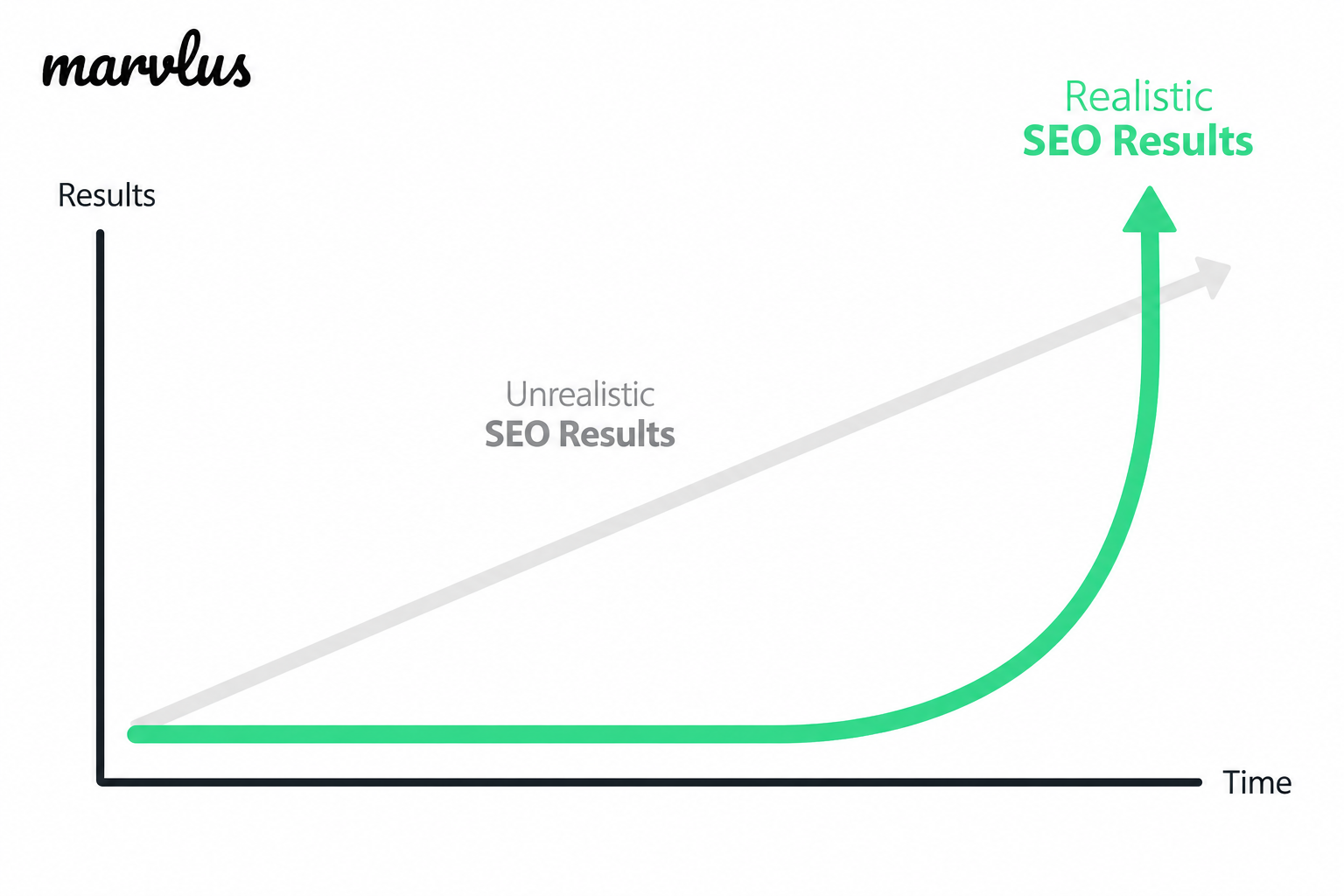
One of the biggest mistakes an agency can make is allowing clients to think SEO is finished.
It isn’t.
Every improvement creates another opportunity to grow.
Show Clients the Work
One of the biggest mistakes an SEO agency can make is assuming clients know how much work is happening behind the scenes.
They don’t.
Most business owners aren’t watching Google Search Console every day. They aren’t reading every article you publish or noticing every technical improvement you make to their website. If you don’t show them what you’re doing, they may assume very little is happening.
We made it a habit to regularly show clients the work we were completing.
If we published new content, we shared it.
If we fixed technical issues, we explained what changed.
If rankings improved, we highlighted them.
If traffic increased, we celebrated it.
Even when results took time, clients could clearly see that progress was being made.
Today, this is easier than ever.
Instead of sending long spreadsheets or complicated reports, create a simple monthly summary that explains what was completed, why it mattered, and what you’re working on next. Include screenshots, before-and-after examples, new content, keyword improvements, and anything else that demonstrates forward progress.
One thing I’ve learned over the years is that clients rarely read thirty-page reports.
They do appreciate simple updates they can understand in a few minutes.
That’s one of the reasons I built Marvlus.
Rather than spending hours creating reports manually, agencies can show clients completed tasks, keyword improvements, AI visibility changes, technical fixes, and ongoing recommendations in one place. It saves time for the agency while making it much easier for clients to see the value they’re receiving every month.
Never assume your clients know how much work you’re doing.
Show them.
The more visible your work becomes, the easier it is for clients to appreciate the progress you’re making together.
Incentivize Your Team
As my agency grew, I realized something important.
Clients don’t build relationships with companies.
They build relationships with people.
In our case, that was usually the account manager.
They were the person answering questions, scheduling meetings, explaining reports, and helping clients understand the progress we were making. The better that relationship became, the longer clients tended to stay with us.
That’s why I wanted our team to care about retention just as much as I did.
We rewarded account managers for keeping clients happy and helping them continue growing their business. It aligned everyone’s goals. The client received better service, the account manager benefited financially, and the agency built more recurring revenue.
One thing I’d encourage you to avoid is rewarding employees based only on the number of clients they manage.
That can unintentionally encourage people to take on more work than they can handle.
Instead, reward the outcomes that matter.
Happy clients.
Long-term relationships.
Great communication.
Excellent service.
When your team genuinely cares about helping clients succeed, those clients notice. They stay longer, they’re easier to work with, and they’re much more likely to recommend your agency to other businesses.
The best account managers I ever worked with didn’t think of themselves as project managers.
They thought of themselves as part of the client’s team.
That mindset made all the difference.
Develop Next Phase Strategy Briefs
One of the easiest ways to lose a client is to run out of ideas.
If every monthly meeting ends with, “Everything looks good. We’ll keep doing what we’re doing,” eventually the client starts wondering why they still need you.
I never wanted a client to feel like we were standing still.
That’s why we developed what we called Next Phase Strategy Briefs.
Instead of simply reporting on what we’d completed, we’d present ideas for what came next. Sometimes it was a new content strategy. Sometimes it was a technical improvement. Sometimes it was expanding into new keywords, improving conversion rates, or identifying new opportunities we’d discovered while working on the account.
The point wasn’t to sell more services.
The point was to demonstrate that we were constantly thinking about the client’s business.
One thing I learned over the years is that every improvement creates another opportunity.
As rankings improve, new keywords become realistic targets.
As traffic grows, conversion optimization becomes more valuable.
As content expands, new internal linking opportunities appear.
A successful SEO campaign is never really finished.
There’s always another opportunity to help the client grow.
I think this is one area where AI can be incredibly helpful.
Today it’s much easier to analyze a website, identify gaps, research competitors, and organize new ideas than it was when I started my agency. The research that once took several hours can often be completed in minutes.
That doesn’t replace strategy.
It gives you more time to think about it.
Whenever possible, end every client meeting with a clear answer to one simple question:
“Here’s what I think we should do next.”
Clients don’t expect you to know everything.
They do expect you to have a plan.
Schedule End of Contract Meetings
One of the biggest mistakes I see agencies make is waiting until the last minute to talk about renewing a client’s contract.
By that point, the client has already started thinking about their options.
They may have received proposals from other agencies, questioned whether they still need SEO, or simply assumed the relationship was coming to an end.
I never wanted renewal conversations to feel like a surprise.
Instead, we scheduled an end-of-contract meeting well before the agreement expired. That gave us an opportunity to review everything we’d accomplished together, discuss the results, answer questions, and present our Next Phase Strategy Brief.
The conversation wasn’t about convincing the client to stay.
It was about showing them where we could continue creating value.
Sometimes we’d recommend expanding into new keywords.
Sometimes we’d propose a new content strategy.
Other times we’d focus on improving conversions, technical SEO, or other opportunities we’d uncovered during the engagement.
The important thing was having a plan.
One thing I’ve learned over the years is that clients don’t usually renew because of one great report.
They renew because they believe you still have a roadmap for helping their business grow.
Don’t wait until the final week of the contract to have that conversation.
Schedule it early.
Give yourself enough time to answer questions, adjust the proposal if necessary, and demonstrate why continuing the relationship makes sense for both sides.
If you’ve consistently delivered results, communicated well, and shown clients where they’re headed next, the renewal conversation becomes much easier.
In many cases, it feels less like renewing a contract and more like continuing a successful partnership.
Chapter 9: Hiring
One of the biggest mistakes I made early on was waiting too long to hire my first employee.
Like many entrepreneurs, I thought I could do everything myself. I answered sales calls, managed clients, performed SEO, built reports, sent invoices, updated the website, and handled every other task that came up during the day.
It worked for a while.
Eventually, it became the biggest obstacle to growing the business.
Every hour I spent doing administrative work was an hour I wasn’t meeting new clients, improving our services, or finding new ways to grow the company.
Hiring gave me that time back.
One piece of advice I’d give anyone starting an SEO company is to hire slowly.
Every employee changes your business. A great hire can dramatically improve your agency. A poor hire can consume an incredible amount of time and energy.
That’s one of the reasons I became a big believer in hiring contractors before offering full-time positions.
Working together on a real project tells you much more than an interview ever will. You learn how someone communicates, whether they meet deadlines, how they solve problems, and whether they’re someone your clients will enjoy working with.
Many of my best employees started as contractors.
It reduced the risk for both of us.
They had an opportunity to see whether they enjoyed working with my company, and I had an opportunity to see whether they were the right long-term fit.
As your agency grows, you’ll probably discover that the first person you hire isn’t another SEO expert.
It’s someone who gives you your time back.
That might be an administrative assistant, a project coordinator, a writer, or someone who can take repetitive work off your plate so you can focus on growing the business.
One of the best investments you can make as an entrepreneur is buying back your own time.
That’s usually where hiring begins.
Your First Hire
One of the questions I get asked all the time is, “Who should I hire first?”
My answer is always the same.
It depends on what takes up most of your time.
When I started my agency, I tried to do everything myself. I answered the phone, met with clients, performed SEO, sent invoices, updated the website, and handled every other task that needed to be done. Eventually there simply weren’t enough hours in the day.
That’s when I realized my first hire didn’t need to be another SEO expert.
It needed to be someone who gave me my time back.
For some agency owners, that’s an administrative assistant.
For others, it might be a writer, a project manager, a virtual assistant, a web developer, or another SEO specialist. Every business is different.
The important thing is understanding where you’re spending your time.
If you’re spending ten hours a week scheduling meetings, sending invoices, or following up with clients, those are probably the first tasks you should delegate. If you’re turning away projects because you don’t have enough time to complete the work, your first hire may need to help deliver client services.
One exercise I’ve always found helpful is writing down everything you do during the week.
Once you have that list, ask yourself two questions.
What tasks require my experience?
What tasks could someone else do just as well?
Start by hiring for the second list.
As your business grows, your job should gradually shift away from doing everything yourself and toward building the systems, team, and processes that allow the agency to grow without depending on you for every decision.
That’s one of the biggest transitions every entrepreneur eventually has to make.
The sooner you learn to trust other people with responsibility, the sooner you’ll create room for your business to grow.
Chapter 10: Incorporating
One of the questions I hear from almost every new entrepreneur is when they should incorporate their business.
The truth is, there isn’t one right answer.
Some people form an LLC before they sign their first client. Others wait until the business is generating consistent revenue. Every situation is different, and the right decision often depends on your location, taxes, liability, and long-term goals.
My advice is simple.
Don’t let paperwork stop you from starting.
Far too many entrepreneurs spend weeks choosing a business name, researching legal structures, designing logos, and ordering business cards before they’ve ever spoken to a customer.
Your first priority should be finding clients.
Once you’ve proven people are willing to pay for your services, you’ll have a much better understanding of what your business actually needs.
That doesn’t mean incorporating isn’t important.
It is.
Separating your personal finances from your business, opening a business bank account, maintaining proper records, and protecting yourself legally are all smart decisions as your company grows.
I also recommend working with both an accountant and an attorney early in the process. They’ll help you choose the right business structure for your situation and can often save you far more money than they cost.
One thing I’ve learned after building several companies is that entrepreneurs often spend too much time trying to make perfect decisions before they have enough information.
Start the business.
Get customers.
Learn what works.
Then build the business around what’s actually happening instead of what you imagine might happen.
Your business structure will evolve over time.
The important thing is getting started.
Chapter 11: Continuing Your Education
One thing I’ve learned after more than twenty years is that the people who continue learning almost always stay ahead of the people looking for shortcuts.
SEO will continue to change.
AI will continue to improve.
The businesses that succeed will be the ones willing to keep learning right alongside them.
To help you get started, here are a few of the people, companies, and publications I still recommend following. Most publish original research, analyze Google updates, share real-world case studies, or build the tools many SEO professionals use every day.
Resources I Recommend
Google Search Central
https://developers.google.com/searchAhrefs Blog
https://ahrefs.com/blogSearch Engine Land
https://searchengineland.comBarry Schwartz (Search Engine Roundtable)
https://www.seroundtable.comGlenn Gabe
https://www.gsqi.comLily Ray
https://lilyray.nycRand Fishkin / SparkToro
https://sparktoro.com/blogOpenAI News
https://openai.com/newsAnthropic News
https://www.anthropic.com/newsGoogle AI Blog
https://blog.google/technology/ai/Google Search Central YouTube
https://www.youtube.com/@GoogleSearchCentralSearch Off the Record Podcast (Google)
https://developers.google.com/search/podcasts/search-off-the-record
Remember, don’t try to follow everyone.
Find a handful of people you trust, read their work consistently, test what you learn on your own websites, and form your own opinions. In my experience, that’s one of the fastest ways to become a better SEO.
Chapter 12: Starting an SEO Company Today
People ask me this question all the time.
“If you had to start over today, knowing everything you know now, what would you do differently?”
The interesting thing is that I probably wouldn’t change as much as people expect.
I’d still start an SEO company.
I’d still build my own website before worrying about anyone else’s.
I’d still spend an unhealthy amount of time learning how search works and trying to understand why one website outranks another.
The biggest difference is that I wouldn’t spend nearly as much time doing repetitive work.
When I started my agency, almost everything was manual. Keyword research took hours. Website audits were slow. Writing reports was tedious. Creating content required a tremendous amount of research, writing, editing, and publishing.
Today, AI changes all of that.
I’d use AI from the very beginning, not because it replaces SEO, but because it gives me more time to focus on the parts of the business that actually matter.
I’d use it to research industries before sales meetings. I’d analyze websites before speaking with prospects. I’d brainstorm content ideas, organize notes, summarize meetings, and automate as much repetitive work as possible. Every hour AI saved me would be another hour I could spend talking with clients, improving my services, or learning something new.
I also think I’d build products much earlier.
One of the biggest lessons I’ve learned over the past twenty years is that software scales differently than services. My agency changed my life, but building products like MySiteAuditor, Checkli, Marvlus, and ContentBeast allowed me to help far more businesses than I ever could through consulting alone.
That doesn’t mean I’d start by building software.
I’d still start by working with clients.
Clients teach you where the real problems are. Every product I’ve built came from solving a problem I experienced while running an agency. Without those clients, I don’t think I would have known what to build.
Finally, I’d remind myself of something that took years to fully appreciate.
Clients don’t hire SEO companies because they want better rankings.
They hire SEO companies because they want more customers.
SEO is simply one of the ways you help them get there.
If you can remember that, you’ll make better decisions.
You’ll create better strategies.
And you’ll build a business that people genuinely value.
Looking back, I don’t think starting an SEO company is any harder today than it was when I quit my job in 2003.
The tools have changed.
The technology has changed.
AI has changed.
But businesses still need customers, and they’re still looking for people who can help them grow.
If I were starting over tomorrow, that’s exactly where I’d begin.
Chapter 13: Final Thoughts
When I quit my job in September of 2003, I had no idea where the journey would take me.
I certainly didn’t think I’d eventually build an agency that generated more than $120,000 per month, sell that company, build another business around SEO, or spend the next two decades helping other companies grow.
I was simply trying to build something of my own.
Looking back, there are plenty of things I would do differently. I’d avoid some expensive mistakes, make decisions faster, and spend less time worrying about things that didn’t really matter.
But I wouldn’t change the decision to start.
Building an SEO company taught me far more than SEO.
It taught me how to sell, market, hire, manage people, solve problems, and build a business. Those lessons have shaped every company I’ve built since.
The tools will continue to change.
Google will continue to change.
AI will continue to change.
That’s part of this industry, and it’s one of the reasons I’ve always enjoyed it.
If you build your business around helping people instead of chasing shortcuts, you’ll be able to adapt no matter what changes next.
I hope this guide gave you a realistic picture of what it takes to build an SEO company. Some of these ideas worked incredibly well for me. Others came from mistakes that I hope you never have to make yourself.
Either way, I hope they save you time.
Most importantly, I hope they give you the confidence to get started.
Because at some point, every agency owner has to stop reading about starting a business and actually start one.
Thanks for reading, and I wish you the best of luck building yours.
Frequently Asked Questions
Do I need to be an SEO expert before starting an SEO company?
No. I wasn’t an SEO expert when I started my agency. Like any profession, you learn by studying, practicing, and working with real clients. The important thing is being committed to continuous learning and never pretending to know something you don’t.
How much does it cost to start an SEO company?
Much less than most businesses. You can start with a computer, an internet connection, a website, and a few software tools. One of the reasons I chose SEO is because it didn’t require a large upfront investment.
Should I quit my job before starting?
That depends on your financial situation. If possible, I recommend building your skills and landing a few clients before leaving your full-time job. Having some income while you’re learning can remove a tremendous amount of pressure.
How do I get my first SEO client?
Start with your own website. Rank it, create useful content, network with other businesses, answer questions online, build partnerships, and create resources that help potential customers. The same strategies I used to land my first clients still work today.
How much should I charge?
There’s no perfect answer. Start with a pricing model you’re comfortable with, gain experience, and adjust your pricing as your confidence and results improve. Most agency owners charge too little in the beginning, and that’s okay. Experience is valuable.
How long does SEO take?
SEO is a long-term investment. Some improvements can produce results within weeks, while competitive industries may take several months or longer. The goal isn’t quick wins. It’s building sustainable growth over time.
Do I need certifications?
No. I’ve never had a client hire my agency because of an SEO certification. They cared about results, experience, communication, and whether they believed we could help their business grow.
Should I specialize in one industry?
You don’t have to, but specializing can make marketing and sales much easier. When you’re known for helping a particular type of business, referrals become easier and prospects gain confidence more quickly.
What software should I buy first?
Don’t feel like you need every tool. Start with the basics, learn them well, and add software only when it solves a real problem. Good agencies aren’t built because they own more software. They’re built because they consistently deliver results.
Can AI replace SEO agencies?
No. AI is an incredible productivity tool, but businesses still need experienced people who understand strategy, marketing, and how to help companies grow. I believe AI will make great agencies more efficient, not obsolete.
Is SEO still a good business to start?
Absolutely. Search continues to evolve, but businesses will always need customers. Whether those customers arrive through Google Search, AI-powered search, or whatever comes next, there will always be demand for people who can help businesses become more visible online.