The biggest mistake in AI visibility is treating it like a new version of keyword rankings. It is closer to reputation monitoring across answer engines, because you need to know when AI tools mention your brand, which sources they trust, what competitors appear instead, and what you can improve.
The best AI search tracking tools do more than run prompts and count mentions. They help us connect visibility with real pages, content gaps, citations, technical readiness, and reporting that clients or stakeholders can understand. The right platform depends on whether we need an affordable monitoring layer, an enterprise intelligence system, or a broader SEO and AI workflow in one place.
How We Compared These AI Visibility Platforms
A useful AI search tracker should reveal meaningful patterns, not create a new dashboard to babysit. We compared the tools below on answer engine coverage, prompt tracking, citation and competitor analysis, connection to SEO work, reporting, and pricing transparency.
| Tool | Best Fit | Starting Price | Standout Strength |
|---|---|---|---|
| Marvlus | Website owners and agencies | Free plan | Audits, topical maps, tracking |
| OtterlyAI | Lean teams | $25 per month | Low-cost daily monitoring |
| Peec AI | Marketing teams | $95 per month | Deep brand and source analysis |
| Semrush AI Visibility | Semrush customers | $99 per domain | AI and SEO in one suite |
| Ahrefs Brand Radar | Research-heavy SEO teams | $50 per month | Massive prompt intelligence |
| Profound | Enterprise teams | Free trial, custom enterprise | Advanced AI search operations |
Prices and feature limits can change, so we recommend confirming plan details directly on each vendor's pricing page before purchasing.
1. Marvlus for Turning AI Visibility Into a Clear Work Plan
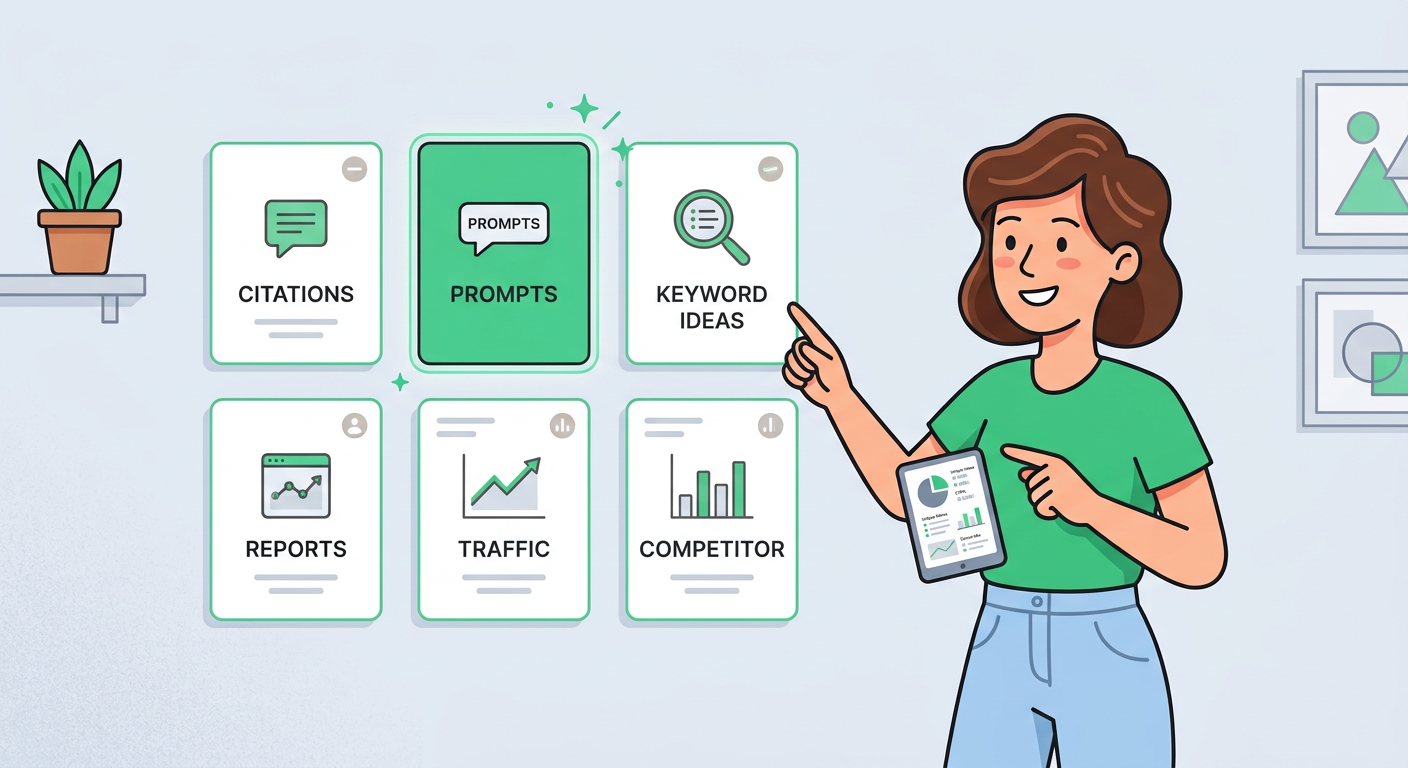
Marvlus is the strongest fit for website owners and agencies that need to move from visibility data to a prioritized set of website improvements. Instead of treating AI mention tracking as a separate activity, it connects AI visibility with website audits, topical mapping, SEO rank tracking, and actionable recommendations.
The platform tracks important prompts across ChatGPT, Gemini, Claude, and additional AI systems, then helps identify where your brand is mentioned, cited, or missing. It also helps us understand whether a weakness is related to thin topical coverage, page structure, technical obstacles, or a competitor owning the conversation. That makes it a sensible choice when the real question is not only where we appear, but what to fix next.
For agencies, Marvlus adds client management, white-label reporting, and embeddable audit widgets that can support lead generation. Website owners can begin with a free AI website audit before committing to a larger stack. Read more about earning citations and mentions in ChatGPT or use its keyword tracking workflow to monitor traditional rankings alongside AI visibility.
Best for: teams that want one workflow for auditing, improving, and monitoring their website rather than a standalone dashboard full of prompts.
2. OtterlyAI for Affordable Daily Prompt Monitoring
OtterlyAI is a compelling entry point for small marketing teams that need daily monitoring without enterprise-level spend. Its Lite plan starts at $25 per month for 15 search prompts and includes daily checks across ChatGPT, Google AI Overviews, Perplexity, and Microsoft Copilot, while Gemini, Claude, and Google AI Mode are available as add-ons.
The product is built around prompt tracking, brand visibility, citation analysis, AI search audits, and reports. That makes it useful when we already know which buyer questions matter and want to track whether the brand is visible across major answer surfaces. The pricing model is easy to understand at the entry level, but agencies should calculate add-on costs carefully if they need several engines and a larger prompt set.
OtterlyAI also has agency-oriented workspace and reporting options, plus Looker Studio connectivity on higher plans. We would choose it when budget is the deciding factor and the primary job is consistent AI mention tracking, not a full SEO operating system. Review the current limits on OtterlyAI's pricing page.
Best for: solo marketers and smaller teams that want daily checks across core AI search engines at a low starting cost.
3. Peec AI for Brand, Citation, and Competitor Analysis
Peec AI is a strong choice for in-house marketing teams and agencies that want a specialized AI search analytics platform. Its published brand plans start at $95 per month for 50 prompts, daily tracking, one project, and three chosen AI models, with unlimited users included.
Its real advantage is the depth of analysis around brand visibility, position, sentiment, competitors, and cited sources. This helps us move beyond a binary question of whether a brand appeared. We can examine how AI describes the brand, which sources support competitors, where prompts expose a content gap, and how visibility changes over time.
Peec has also expanded into AI referral measurement, connecting AI visibility to sessions, engagement, conversion, and revenue data. That is valuable for teams under pressure to demonstrate commercial impact rather than report an abstract share-of-voice metric. Its larger plans can get expensive, but the model is a good fit for multi-stakeholder marketing teams that want detailed reporting and source intelligence. Explore Peec AI's platform and pricing.
Best for: agencies and established brands that need polished reporting, unlimited seats, competitor benchmarking, and stronger measurement of brand perception.
4. Semrush AI Visibility for Existing Semrush Users
Semrush AI Visibility is the easiest option for teams already using Semrush for rank tracking, keyword research, site audits, or competitor analysis. The AI Visibility Base plan starts at $99 per domain per month when billed annually and includes 25 custom prompts, competitor analysis, prompt research, an AI-readiness site audit, and tracking across ChatGPT, Google AI, Gemini, and Perplexity.
The upside is consolidation. We can keep traditional SEO and AI visibility in a familiar environment, which reduces training and reporting friction. That is especially helpful when the same people are responsible for organic rankings, content briefs, technical audits, and AI answer visibility.
The limitation is that focused AI visibility platforms may offer deeper prompt, source, or perception analysis in some workflows. Still, if your team already pays for Semrush and needs broad AI tracking with a recognizable SEO framework, adding its AI product may be more efficient than introducing another specialist tool. Check the latest limits on the Semrush AI Visibility pricing page.
Best for: SEO teams that want AI visibility inside the platform they already use every week.
5. Ahrefs Brand Radar for Large-Scale Market Intelligence
Ahrefs Brand Radar is especially useful for teams that need market-level research in addition to their own tracked prompts. The tool tracks brands across AI answers, cited pages, YouTube, Reddit, and search demand, while separating custom-prompt monitoring from a larger AI Visibility Index.
Ahrefs says its index analyzes visibility across more than 454 million search-backed prompts, making it a powerful option for discovering topics and conversations we might not think to monitor manually. That scale matters for established brands with broad category demand, because it can surface where a brand is already visible and where competitors dominate. Learn how the product defines these data sets on the Ahrefs Brand Radar page.
Custom prompts start at $50 per month, while the AI Visibility Index starts at $199 per month. The platform is likely more than a small site needs, but it makes sense for SEO teams that already rely on Ahrefs and want to connect AI mentions with query demand, cited pages, and offsite visibility.
Best for: research-driven SEO teams, larger brands, and Ahrefs customers who want AI search data connected to a broad keyword and content research ecosystem.
6. Profound for Enterprise AI Search Operations
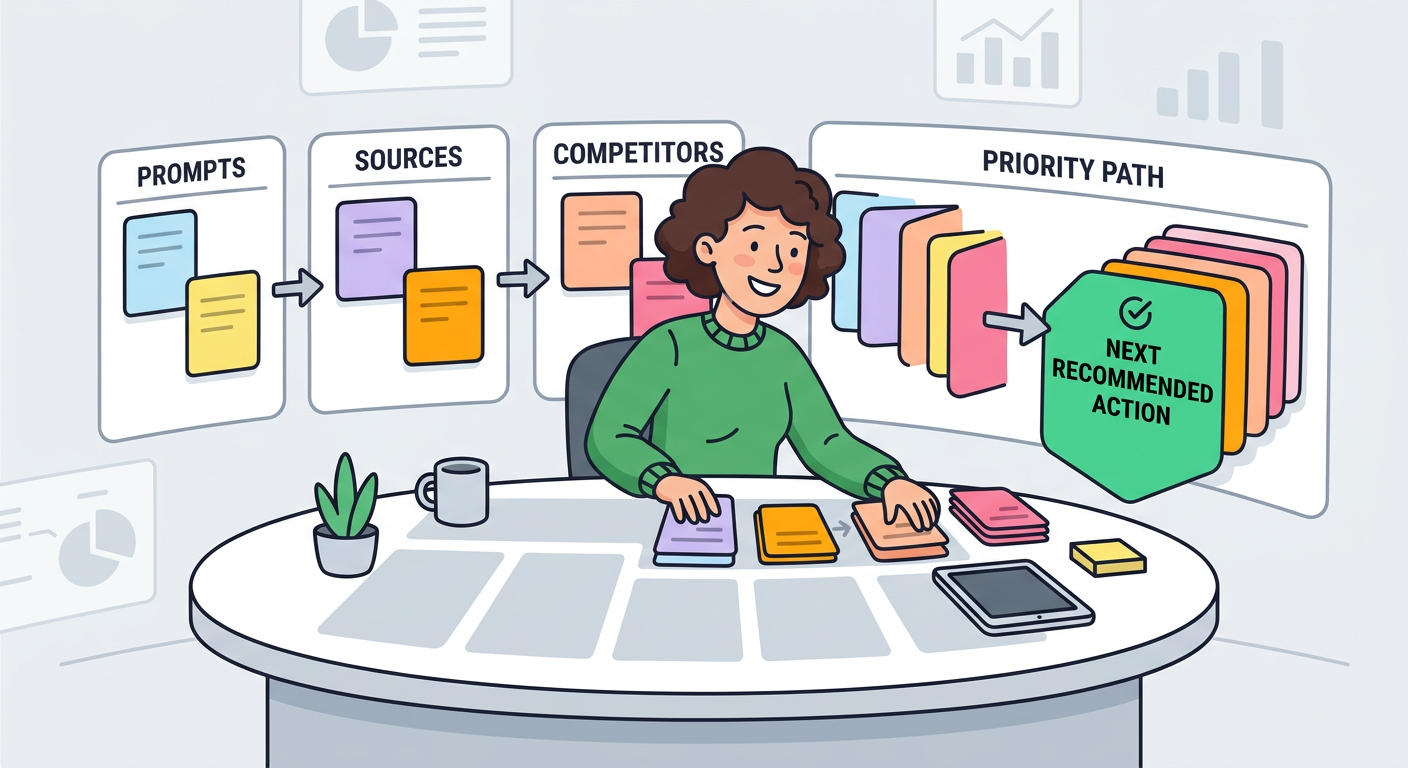
Profound is designed for companies that treat AI search as a serious marketing channel and need advanced capabilities across visibility, content operations, traffic attribution, and AI crawler activity. Its current pricing page offers a free trial with 10 one-time ChatGPT prompts, while enterprise plans include tailored prompt tracking, daily updates, up to nine answer engines, integrations, and dedicated support.
The platform goes deeper than basic share of voice. It includes analysis of how brands and competitors appear in AI answers, page-level citation and technical signals, agent workflows, and reporting that can support large content and performance teams. Profound's own product materials also emphasize integrations with analytics, hosting, and infrastructure providers, which is important when AI visibility needs to be connected to a complex web stack.
That depth comes with a tradeoff. Profound is usually better suited to enterprise organizations with clear ownership, sufficient budget, and the ability to act on detailed findings. Smaller teams may find it more complex than they need. See the available trial and enterprise details on Profound's pricing page.
Best for: enterprise marketing organizations that need advanced AI visibility intelligence, agent-led workflows, and broad integrations.
What Actually Matters When Choosing a Tool
The best platform is the one that matches the decisions your team can make every month. A tool with more engines and charts will not help if nobody has time to translate findings into page updates, new content, stronger product information, or earned third-party coverage.
Start With Buyer Prompts, Not Brand Prompts
Brand prompts can show how an AI engine describes your company, but unbranded buyer questions reveal whether you are truly competing for discovery. Build a prompt set around category comparisons, alternatives, pricing questions, use cases, local needs, and implementation concerns.
For example, an agency might track prompts such as best AI visibility tool for B2B SaaS, how to measure AI search traffic, or which SEO agency offers white-label reports. A local business might prioritize service-plus-location questions. The point is to measure the conversations that can lead to a real decision.
Separate Mentions From Citations
A mention means an AI answer names your brand. A citation means it links to a page or domain as support. Both matter, but they tell different stories. Mentions reveal brand inclusion, while citations can reveal which pages or sources are earning trust and potential referral traffic.
If the tool cannot make this distinction clear, its reports may look better or worse than reality. Learn more about why AI citations and mentions require different measurement.
Make AI Tracking Part of Your Existing SEO Process
AI visibility should not replace technical SEO, content quality, internal linking, or traditional rank tracking. We get more value when we use AI tracking to prioritize work already connected to revenue, such as improving a product page that appears in citations but converts poorly, or building a missing comparison page for a profitable buyer question.
A clear topical structure also helps. A topical authority plan gives individual pages context, helps visitors explore related information, and gives answer engines a more complete picture of what your site knows.
Questions Teams Ask Before Buying
Can an AI search tracker guarantee that our brand will appear in ChatGPT?
No. AI answers can vary by prompt wording, location, personalization, fresh information, and the answer engine itself. A tracking tool gives us structured evidence about patterns, but it cannot guarantee a placement in every response.
How many prompts should we track at the start?
Most smaller teams can begin with 20 to 50 high-intent prompts. Focus on buyer questions tied to your services, products, comparisons, and common objections, then expand once you know which categories create useful opportunities.
Do we need daily tracking?
Daily tracking is helpful for detecting trends and monitoring fast-changing competitive categories, but we should not overreact to one day of movement. Review weekly and monthly patterns, then connect major shifts to content releases, site changes, PR, product updates, or competitor activity.
Is AI search tracking different from Google rank tracking?
Yes. Traditional rank tracking measures a page's position in search results. AI tracking measures whether a brand or source appears within a generated response, how prominently it appears, and sometimes the sentiment, cited sources, or answer context around it.
How can we prove that AI visibility drives business results?
Connect your AI tracking data to analytics, leads, trials, demos, or ecommerce revenue. Track AI referral traffic where available, annotate meaningful website changes, and compare movement in visibility with conversions from the pages and markets you care about.
Should agencies give every client access to the tool?
Usually, yes, but access should fit the relationship. A client-facing dashboard or white-label report can build trust, while the agency keeps the deeper working view for prompt research, audits, content planning, and implementation priorities.
See Where AI Is Leaving Your Brand Out
If your team needs a clearer picture of how AI systems understand your site, start with a free Marvlus AI website audit. You can identify visibility gaps, track valuable prompts, build a stronger topical plan, and turn the findings into recommendations your team or clients can act on.
Choose a Tool You Will Actually Use
AI visibility is becoming a useful extension of SEO, not a replacement for it. The strongest teams will track the questions that influence buying decisions, measure mentions and citations separately, improve the pages behind the data, and repeat that process consistently.
For a lean monitoring setup, OtterlyAI is a sensible starting point. Peec AI and Ahrefs Brand Radar bring more depth for teams that need research and reporting, Semrush makes sense for existing suite users, and Profound is built for enterprise-scale operations. If we need a connected workflow that starts with site analysis and ends with a prioritized improvement plan, Marvlus is the more complete choice. The key is simple: pick a platform that turns AI search visibility into work your team can actually complete.