
Most website owners are still treating ChatGPT like a novelty tool. Smart marketers are treating it like a new discovery channel, one where your brand can show up before someone ever visits Google, reads a blog post, or clicks a product page.
That’s why how to get cited in ChatGPT has become such a practical growth question. It’s not just about vanity mentions. It’s about being included when people ask AI tools for recommendations, definitions, comparisons, vendor options, tutorials, and buying advice.
The good news? You don’t need to trick the model. You need to make your content easier to understand, verify, extract, and trust. OpenAI says ChatGPT can use current web information and provide source links when needed, and its own usage analysis reported 700 million weekly active users at the time of the study. That’s a lot of potential discovery moments for brands that build useful, credible content. OpenAI
Quick Framework for ChatGPT Visibility
| Signal | What It Means | What To Improve | Best For |
|---|---|---|---|
| Authority | Your site is trusted | Expert bios, sources, links | B2B, finance, health |
| Clarity | AI can parse your page | Definitions, headings, FAQs | Blogs, SaaS, services |
| Originality | You add unique value | Data, examples, opinions | Thought leadership |
| Structure | Answers are extractable | Tables, lists, schema | Tutorials, glossary pages |
| Freshness | Content stays current | Updates, dates, audits | Fast-moving topics |
What It Really Means to Be Cited in ChatGPT
Being cited in ChatGPT means your webpage, article, product page, report, or listing appears as a source link in an AI-generated response. In plain English, ChatGPT uses your page as supporting material for an answer and gives the user a way to visit it.
That can happen when someone asks a timely question, compares tools, looks for local businesses, evaluates products, or requests information that benefits from current web data. It can also happen when your content is already strongly associated with a topic across the web.
Here’s the thing. ChatGPT doesn’t “rank” pages exactly like traditional Google results. It looks for useful sources that match the user’s intent, then synthesizes answers from available information. So the job is less about chasing one blue link and more about becoming a reliable source for a specific topic cluster.
Why AI Mentions Matter for Small Businesses
If you’re a small business, blogger, eCommerce brand, consultant, or agency, this shift matters because buyers are asking AI tools questions they used to ask Google. They’re asking things like “best CRM for a small real estate team,” “how do I improve topical authority,” or “what’s the difference between AEO and SEO?”
Yext analyzed 6.8 million AI source mentions across ChatGPT, Gemini, and Perplexity and reported that brand-managed sources made up 86% of the sources surfaced in AI-generated answers. Its study also found first-party websites were the largest single source category at 44%. Yext
That stat should change how you think about your website. Your site isn’t just a brochure anymore. It’s training-ground material for how AI systems understand your brand, products, expertise, and relevance.
How to Get Cited in ChatGPT With Better Content
The simplest answer to how to get cited in ChatGPT is this: publish content that gives AI tools a clean, trustworthy, specific answer to a real question. That sounds obvious, but most websites still publish vague content with no sources, thin examples, weak structure, and unclear ownership.
Start With One Clear Question Per Page
Every high-performing AI-friendly page should have a job. If your page answers “what is topical authority,” don’t bury that answer under brand fluff, generic intro copy, and unrelated service pitches.
Open with a concise definition, then expand with examples, related terms, steps, mistakes, and FAQs. If you need inspiration, look at how Marvlus explains topical authority for website owners as a focused educational topic instead of a scattered opinion piece.
A clean page intent helps users, but it also helps AI systems identify what your page should be used for. One page, one core answer, one clear audience.
Add Original Experience, Not Just Generic Advice
AI tools have plenty of generic content to choose from. If your article says the same thing as every other article, there’s no strong reason to include you as a source.
Add what only you can add. That might include screenshots from your workflow, customer examples, mini case studies, pricing observations, failed experiments, benchmark data, or a founder’s point of view.
For example, instead of saying “FAQs help AI visibility,” show how you rewrote five FAQs and what changed in impressions, rankings, or AI mentions over the next month. Specific beats polished every time.
Use Real Sources and Named Evidence
ChatGPT is more likely to trust pages that are grounded in verifiable information. Link to official documentation, academic papers, government data, recognized industry reports, or first-party product pages when they support your claims.
The original Generative Engine Optimization paper found that content optimization methods like adding statistics, source references, and quotations could improve visibility in generative engine responses, though the impact varied by domain and tactic. GEO Paper
Don’t add links just to look smart. Use them where a reader would naturally ask, “Says who?” If the claim matters, back it up.
Build Pages AI Can Easily Understand
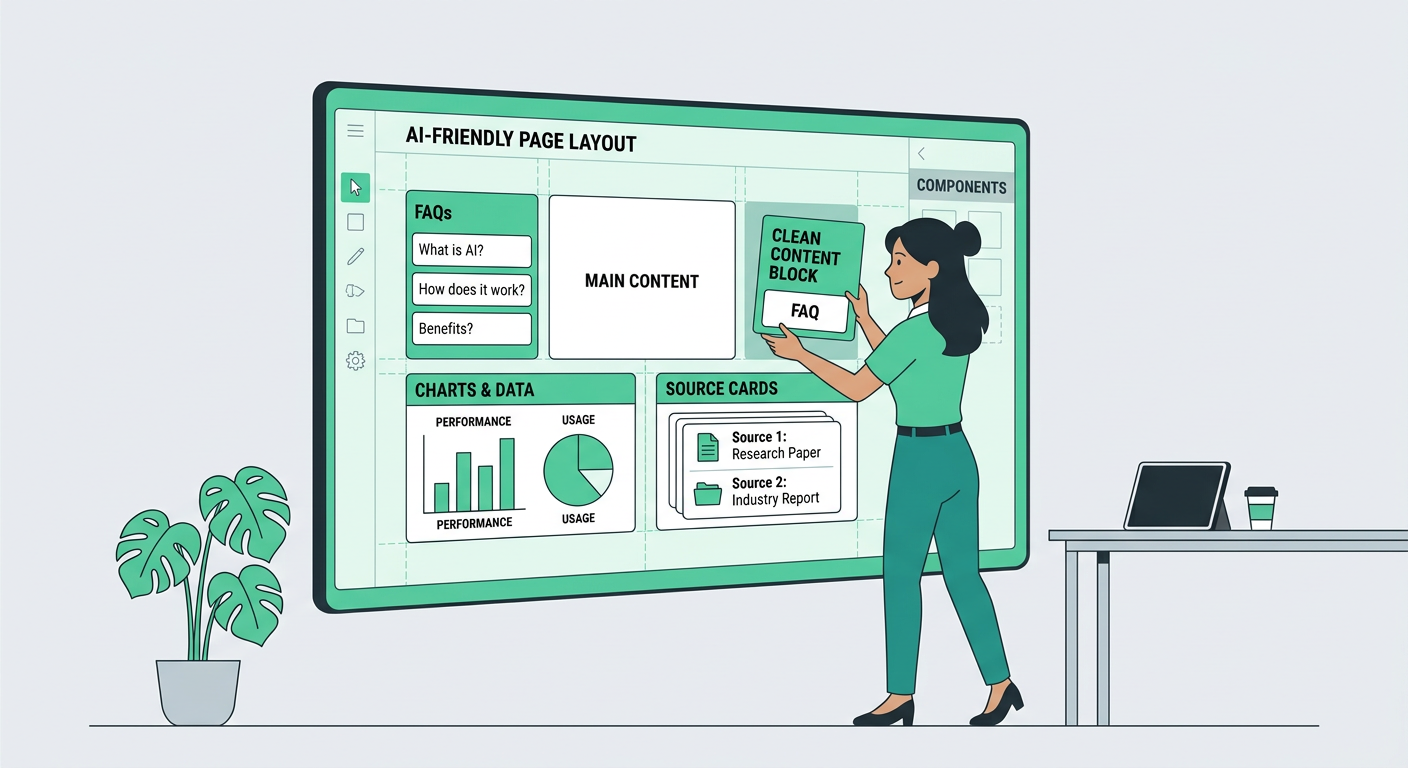
ChatGPT doesn’t need your content to be robotic. But it does need your content to be easy to parse. Good formatting is not decoration. It’s a visibility signal.
Use Definitions Near the Top
If your page targets a glossary term, beginner guide, or comparison topic, include a short definition near the beginning. Keep it direct enough that it can stand alone.
Example: “Answer Engine Optimization is the process of structuring content so AI tools, voice assistants, and answer boxes can extract clear responses from your website.”
Then explain the nuance below. This gives AI systems a simple answer and gives human readers the detail they came for.
Break Content Into Extractable Sections
Use descriptive headings, short paragraphs, bullets, tables, and FAQs. Avoid huge walls of text that make one idea blend into another.
A good section should answer one question. A good paragraph should move one idea forward. A good table should compare options without forcing the reader to decode long sentences.
If you want a practical starting point, compare your content against Marvlus’ guide on AEO vs SEO and notice how comparison-driven content benefits from clear sectioning.
Add Schema Where It Fits
Schema markup helps machines understand what type of page they’re looking at. For this topic, useful schema types often include Article, FAQPage, HowTo, Product, Organization, LocalBusiness, Review, and BreadcrumbList.
Schema won’t magically make ChatGPT include you. But it can reduce ambiguity, improve your broader visibility, and make your content easier for systems to classify.
For small businesses, start with Organization or LocalBusiness schema, then add FAQ schema to educational pages and Product schema to product pages.
Strengthen Your Brand Entity
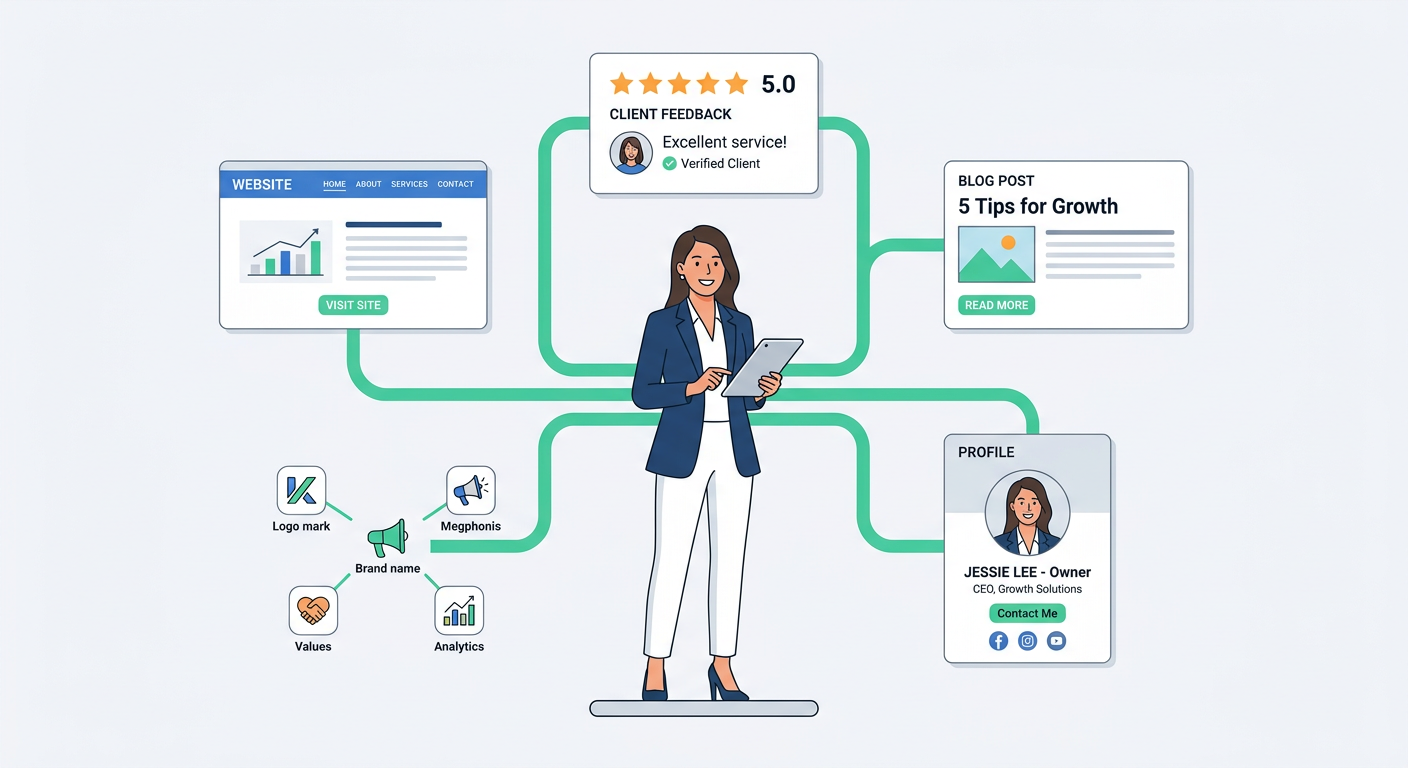
AI tools need to understand who you are before they can confidently mention you. If your brand has inconsistent names, outdated profiles, thin About pages, and disconnected content, you’re making that harder.
Create a Strong About Page
Your About page should clearly state what your business does, who it serves, where it operates, and why you’re credible. Include founder names, team expertise, credentials, media mentions, awards, and contact details where relevant.
This isn’t just for trust. It helps AI systems connect your brand to topics, people, locations, services, and proof points.
Be Consistent Across the Web
Use the same brand name, description, address, product names, and category language across your website, LinkedIn, directories, marketplaces, review sites, and press mentions.
If one profile says you’re a “growth agency,” another says “SEO consultant,” and your website says “AI visibility platform,” machines may struggle to understand your core identity. Consistency builds confidence.
Earn Mentions From Relevant Third Parties
First-party content matters, but third-party validation still helps. Guest posts, podcast appearances, partner pages, review platforms, news mentions, and expert roundups can all reinforce your authority.
Focus on relevance over volume. One strong mention from a respected industry site can be more useful than dozens of low-quality directory links.
Technical Basics That Can Block AI Visibility
Content quality matters, but technical access matters too. If your site is hard to crawl, slow to render, or poorly organized, you’re creating unnecessary friction.
Make Important Pages Indexable
Check that your key pages are not blocked by robots.txt, noindex tags, canonical mistakes, login walls, or broken internal links. If a page can’t be accessed or understood, it can’t reliably become a source.
This is especially important for product pages, pricing pages, comparison articles, glossary pages, and educational guides. These are often the pages AI tools need when answering commercial or informational questions.
Improve Site Speed and Clean HTML
A fast, clean site helps both people and machines. Avoid hiding important content inside heavy scripts, image-only sections, or interactive elements that don’t expose meaningful text in the HTML.
Your best answers should be visible as plain text on the page. If the most important information only appears inside an image, animation, or PDF, you’re making extraction harder than it needs to be.
Use Internal Links to Build Topic Clusters
Internal links show how your ideas connect. If you publish a guide on how to get cited in ChatGPT, link it to related pages about AEO, topical authority, AI visibility audits, keyword mapping, and content planning.
For example, you could use a free AI website audit to identify weak AI visibility signals, then use a topical map generator to plan supporting content around your core topic.
A Progressive Content Strategy for Day Two and Beyond
Since this is recurring content, don’t treat one article as the whole strategy. Treat it as Day Two in a progressive visibility system.
Day One: Publish the Core Guide
Your first asset should be a practical, comprehensive guide that answers the main topic. It should define the concept, explain why it matters, list the steps, include examples, and answer FAQs.
This is your pillar page. It gives your audience one strong place to start and gives AI systems a clear source for the topic.
Day Two: Build Supporting Glossary and Comparison Pages
Now expand outward. Create pages for related terms like AI visibility, answer engine optimization, generative engine optimization, topical authority, entity SEO, structured data, and AI mentions.
Add comparison articles too. “AEO vs SEO,” “GEO vs traditional SEO,” and “ChatGPT vs Google AI Overview for marketers” can all capture different intents.
Day Three: Add Proof Assets
Next, create content with original value. Publish mini studies, customer stories, benchmark posts, teardown articles, and “what we changed” updates.
AI tools need useful facts to reference. Proof assets give them something more concrete than another generic how-to post.
Day Four: Refresh and Monitor
Update your pages monthly or quarterly depending on the topic speed. Add new sources, remove outdated claims, improve examples, and expand FAQs based on customer questions.
This is where many competitors quit. They publish once, then wonder why fresher, clearer pages start getting the mentions.
Common Mistakes That Keep Brands Invisible
The biggest mistake is writing only for algorithms. If your content doesn’t help a real person make progress, it probably won’t be the strongest source for an AI answer either.
Another mistake is publishing isolated blog posts with no topical support. A single article can rank, but a cluster builds authority. The more thoroughly your site covers a subject, the easier it is for AI systems to associate your brand with that subject.
Finally, many brands ignore their product and service pages. ChatGPT can include commercial sources when users ask for recommendations, but your pages need clear positioning, pricing details where possible, use cases, customer fit, and comparison-friendly language.
Track What’s Working
You can’t improve what you don’t monitor. Start by testing real prompts your customers might ask, then document which brands and pages appear.
Track prompts like:
- “Best tools for tracking AI visibility”
- “How can a small business improve AI mentions?”
- “What is answer engine optimization?”
- “Best SEO audit tools for website owners”
- “How do I get my brand mentioned by ChatGPT?”
Then look for patterns. Are competitors being mentioned because they have better comparison pages? More third-party reviews? Clearer product pages? Stronger educational content?
This is also where a tool like Marvlus can help. Run an AI website audit to spot gaps in brand clarity, topic coverage, formatting, and AI visibility signals before you spend weeks creating more content.
Improve Your AI Visibility With Marvlus
If you want a faster way to see what’s holding your website back, Marvlus helps you audit AI visibility, SEO signals, content structure, and topic opportunities in one place. It’s built for founders, marketers, agencies, and website owners who want practical next steps instead of another confusing report.
Run your site through the audit, pick the highest-impact fixes, and turn your content plan into weekly progress.
FAQ
Can you guarantee that ChatGPT will cite my website?
No. No honest marketer can guarantee a specific ChatGPT source mention. You can improve your odds by creating credible, well-structured, accessible content, but AI responses vary based on the prompt, timing, user context, available web data, and model behavior.
How long does it take to get cited in ChatGPT?
It depends on your starting point. A strong, established site with clear topical authority may see progress faster than a new site with thin content and few external mentions. Plan in months, not days, especially if you’re building authority from scratch.
Do backlinks still matter for AI visibility?
Yes, but think of backlinks as one trust signal among many. Relevant mentions, strong internal linking, consistent brand information, expert content, and high-quality sources all help build confidence around your site.
Should I create an llms.txt file?
An llms.txt file can be useful as an emerging way to guide AI systems toward important content, but it’s not a replacement for indexable pages, strong site architecture, and helpful content. Treat it as an extra layer, not the foundation.
What type of content is most likely to be used as a source?
Clear educational pages, comparison guides, original data, expert explainers, product pages with specific details, and FAQ-rich resources tend to be strong candidates. The best format depends on the user’s question and the topic.
Is this different from SEO?
Yes and no. The fundamentals overlap: helpful content, authority, structure, technical access, and relevance. The difference is that AI tools synthesize answers, so your content needs to be easy to extract, verify, and summarize.
Should small businesses care about ChatGPT mentions now?
Yes. You don’t need to abandon traditional SEO, but you should start building AI visibility now. Early work on brand clarity, topic depth, and trustworthy content can compound over time.
Final Takeaway
Learning how to get cited in ChatGPT isn’t about gaming AI. It’s about becoming the clearest, most trustworthy, most useful source for the questions your audience is already asking.
Start with one focused topic, write a better answer than what’s already out there, support your claims, strengthen your brand entity, and keep improving the page over time. Do that consistently, and your website becomes much easier for both people and AI tools to trust.