A traffic dip can make even an experienced website owner feel like the floor moved overnight. But most of the time, understanding Google algorithm updates is less about finding a secret fix and more about separating real signals from normal ranking noise.
Google changes Search constantly. The updates that deserve your attention are the broad or targeted changes that alter how its systems evaluate relevance, quality, originality, usability, and spam. For early-stage businesses and the agencies supporting them, the smartest response is calm measurement, focused improvements, and content that earns trust before it tries to earn clicks.
Google says its ranking systems consider many signals across hundreds of billions of web pages to surface useful results. That scale is exactly why a single on-page tweak rarely explains a major visibility change, or reliably reverses one. Google’s ranking systems documentation explains the systems and signals at a high level.
What an Algorithm Update Actually Changes
A Google algorithm update changes how Search assesses and orders results. It does not automatically mean your site has a penalty, and it rarely has one universal fix.
A useful way to think about a core update is a new standard for judging the same library. Your pages may still be accurate and useful, but other pages may better match the searcher’s intent, show clearer firsthand experience, provide more complete answers, or deliver a smoother page experience.
| Update type | What it affects | What you may notice | Best first response |
|---|---|---|---|
| Core update | Broad ranking systems | Site-wide movement | Review quality and intent |
| Spam update | Manipulative practices | Sharp declines or removals | Audit policy compliance |
| Reviews system | Review quality | Product or affiliate pages move | Add testing and evidence |
| Technical change | Crawling or rendering | Indexing or visibility issues | Check Search Console |
Google describes core updates as broad changes designed to improve the helpfulness and reliability of results. They do not target individual sites or pages by name. A ranking loss can simply mean competitors now provide a more satisfying answer for the same query. Google’s core update guidance makes this distinction clear.
That distinction matters because it protects your team from bad decisions. If a page slips from position three to five, deleting it, changing its URL, or rewriting every paragraph may create more risk than value. If a group of high-value pages falls sharply and stays down, that is when a deeper content and site-level assessment makes sense.
The Signals That Matter More Than Algorithm Chatter
The most durable SEO work improves usefulness, credibility, and accessibility for real visitors. Chasing every rumor is much less effective than strengthening the parts of your site Google repeatedly encourages creators to evaluate.
Search Intent and Task Completion
A page should help visitors finish the job that brought them there. Someone searching for a software comparison may need transparent pricing, implementation limits, screenshots, and a recommendation by business size. They do not need 2,000 words of generic definitions before they can find the answer.
Review the current results before updating a page. Look for the format Google is rewarding, such as a calculator, comparison, product category, tutorial, local page, or opinion from someone with direct experience. Then create the most useful version for your particular audience instead of copying the same outline.
Firsthand Expertise and Trust Signals
Google’s people-first content guidance encourages creators to make clear who produced content, how it was created when relevant, and why it exists. That means author pages, expert review, original images, product testing, methodology notes, customer examples, and clear business information all pull in the same direction. Google’s people-first content guidance is a practical checklist for this work.
For an agency client, this may mean interviewing the business owner before drafting a service page. For a software company, it may mean asking the product team to show the actual workflow, edge cases, and limitations. For an ecommerce brand, it can mean publishing sizing guidance, material details, and answers collected from support tickets.
Technical Health and Page Experience
Technical SEO is not a magic ranking lever, but broken fundamentals can stop good content from performing. We should monitor indexing, redirects, canonical tags, internal links, mobile rendering, structured data validity, and site speed as part of routine maintenance.
Page experience also deserves context. Google has explained that relevant content can still rank even when page experience is not ideal. Still, slow pages, intrusive popups, confusing navigation, and unstable layouts can weaken conversions and make a useful answer harder to use. Fix them because visitors benefit, not because someone promised an instant ranking jump.
Originality Over Volume
Google folded its former helpful content system into core ranking systems in March 2024. The direction is clear: content made mainly to attract organic traffic, especially at scale without added value, creates risk. Google’s explanation of the March 2024 changes also explains its policy focus on scaled content abuse.
This does not mean AI-assisted writing is automatically a problem. It means publishing hundreds of thin pages with no meaningful expertise, verification, or reader benefit is a fragile strategy, regardless of whether a person, an AI tool, or both produced the draft.
How to Diagnose a Ranking Drop Without Overreacting
The right diagnosis starts with dates and segments, not opinions. We should establish whether there is a sustained organic-search problem, determine which pages and queries changed, and only then decide what to improve.
Confirm the Timing First
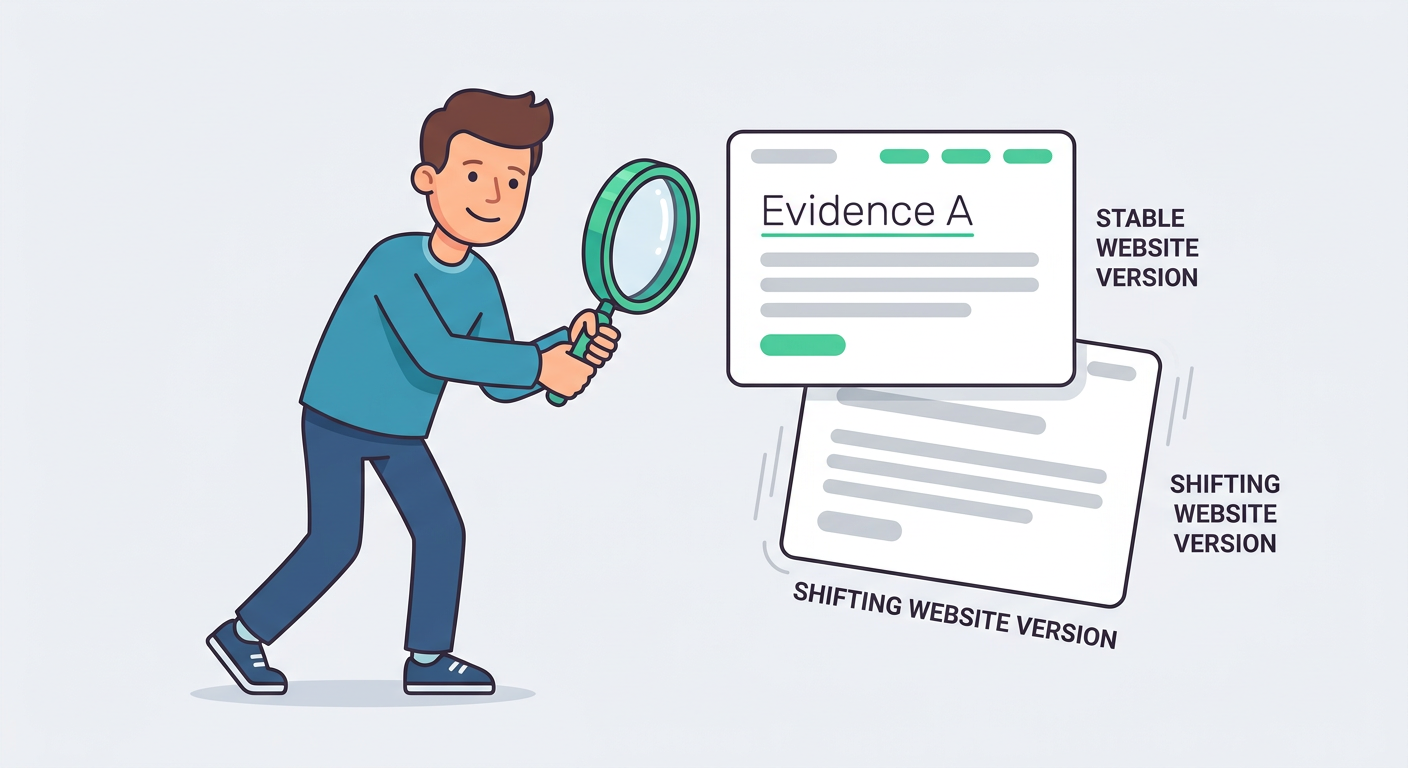
Check Google’s Search Status Dashboard to see whether a confirmed update began or finished near the date of the decline. Do not assume correlation is causation. A redesign, migration, tracking change, seasonal demand shift, competitor launch, or indexing problem can happen in the same period.
Google recommends waiting at least a full week after a core update finishes before analyzing performance. That pause gives reporting time to settle and reduces the temptation to respond to short-term volatility with destructive changes.
Segment Before You Diagnose
In Google Search Console, compare a stable period before the movement with a stable period after it. Then separate the data by page group, query theme, country, device, search appearance, and search type.
Ask these questions:
- Did clicks fall because impressions fell, average position fell, or click-through rate changed?
- Is the decline limited to blog content, product pages, location pages, or review content?
- Did only a few high-traffic URLs drop, or did the entire site move?
- Are branded queries stable while non-branded discovery queries fall?
- Did competitors change their content format, offerings, or authority signals?
A single declining page often needs page-level work. A wide drop across many topics may point to site focus, duplicated content, weak trust signals, or a gap between what the site promises and what it proves.
Look for Meaningful Losses, Not Tiny Movements
Rankings naturally move. A shift from position two to four can be normal competition and personalization at work. A sustained move from position four to position 29 across dozens of commercial pages is a different situation.
Document the affected URLs in a simple spreadsheet. Include the old and new query themes, intent, page type, conversion value, main competitor patterns, likely content gaps, and next action. This creates a defensible workflow for teams and gives clients a clear explanation that is based on evidence instead of panic.
A Progressive Content Strategy for Early-Stage Sites
Early-stage websites should build proof before scale. Publishing a large library too early can create shallow topical coverage and leave your strongest commercial pages underdeveloped.
We recommend starting with a focused cluster of six to ten pages that directly support revenue and demonstrate genuine expertise. For a local service business, that might include core service pages, a location page, a pricing or process page, case studies, and a detailed buyer’s guide. For a SaaS company, it could include solution pages, one comparison page, a setup guide, use cases, and customer evidence.
Build the First 30 Days Around Evidence
During the first month, improve the pages closest to customer decisions. Add real examples, process details, team credentials, screenshots, pricing context, policy information, and internal links that guide people to the next useful step.
Avoid publishing broad articles just because a keyword tool reports volume. A new company that writes about every adjacent topic can dilute its expertise. A smaller library that answers the highest-value questions better than anyone else is more credible and easier to maintain.
Expand in Layers, Not Random Topics
In the next phase, add supporting content that answers questions arising before and after the sale. Use sales calls, demos, live-chat transcripts, customer onboarding, and support tickets as your content research engine.
For example, a project-management platform could begin with pages about team coordination, workflows, and pricing. It can then expand to templates, integrations, adoption challenges, role-specific use cases, and practical comparisons. Each new page should connect to an existing commercial or educational hub, rather than sitting alone in the archive.
Refresh What You Already Earned
Content maintenance is a compounding advantage. Revisit pages that already get impressions but underperform on clicks or rank just outside the top results. Update facts, improve introductions, add missing evidence, clarify navigation, and answer the questions competitors leave unresolved.
For agencies, make this a recurring client deliverable. A monthly content-quality review is usually more valuable than a monthly batch of low-effort articles. For website owners, it creates a manageable rhythm: publish one strong page, improve two existing pages, then measure what changed.
A platform like Marvlus can help teams bring website audits, rank tracking, topical mapping, and AI visibility monitoring into one workflow, which makes it easier to prioritize real opportunities instead of reacting to every headline.
What Not to Do After a Core Update
The fastest way to make an algorithm update worse is treating it as a demand for cosmetic change. Strong SEO responds to evidence, not superstition.
Do not rewrite pages that continue to perform well simply because an update was announced. Do not remove useful pages in bulk because they have low traffic this month. Do not block search engines from valuable content, stuff keywords into headings, or buy links to force a recovery.
We should also avoid assuming every decline is a manual action. Manual actions come with notifications in Search Console. Broad algorithmic reassessments require a broader response: better content, clearer expertise, stronger information architecture, and a better visitor experience.
If you suspect a spam-policy issue, be more direct. Review pages for scaled low-value content, third-party sections that lack close editorial oversight, deceptive redirects, manipulative links, or expired domains repurposed for unrelated ranking gains. Clean up the underlying practice rather than trying to disguise it.
A Repeatable Monitoring Routine for Owners and Agencies
A simple operating rhythm turns Google updates into a manageable part of SEO. The goal is not to watch rankings all day. It is to notice meaningful movement early and have a measured process ready.
Weekly Checks
Review organic clicks, impressions, top query changes, new indexing issues, and your highest-value landing pages. Keep a short annotation log for launches, content releases, site changes, redirects, and confirmed Google updates.
Monthly Reviews
Audit a priority page group each month. Compare the page to current results, validate facts, check internal links, identify missing questions, and collect fresh evidence from your team or customers.
Quarterly Decisions
Every quarter, review your content inventory at a strategic level. Decide which topics deserve deeper coverage, which thin pages should be consolidated or rebuilt, and which pages are no longer relevant to the business. This is how we create a site with a clear purpose instead of an expanding pile of URLs.
Questions Website Owners Ask About Google Updates
How often does Google update its algorithm?
Google makes ongoing changes to Search, while broader core updates happen several times a year. Most smaller changes are not announced, so we should focus on confirmed updates and sustained performance patterns rather than daily rank fluctuations.
Does a core update mean Google penalized my website?
No. A core update usually reflects a broad reassessment of how results are ranked, not a penalty against your site. Check Search Console for a manual-action notification if you believe there may be a policy issue.
How long does it take to recover after a Google core update?
Some improvements can be reflected within days, but broader site-quality changes may take months to be understood by Google’s systems. Recovery is not guaranteed, so prioritize improvements that make the site genuinely more useful even if rankings take time to respond.
Should we delete low-traffic content after an update?
Not automatically. Improve, consolidate, redirect, or remove a page only after assessing its usefulness, uniqueness, conversion value, and fit with your site’s purpose. Low traffic alone is not proof that a page is harmful.
Can AI-written content rank in Google?
Yes, if it provides real value and follows Google’s quality and spam policies. The risk comes from producing unoriginal or low-value pages at scale to manipulate rankings, not from using AI as a drafting or research assistant.
Do backlinks still matter after algorithm updates?
Links remain one of many signals Google uses to understand pages and discover useful content. Earned, relevant links can support visibility, but they cannot compensate for pages that fail to meet the searcher’s needs.
Make Your Next SEO Decision With Better Evidence
If reporting is scattered across spreadsheets, dashboards, and guesswork, it is hard to know what deserves attention first. Marvlus helps website owners and agencies assess technical issues, track rankings, map topical opportunities, monitor AI mentions, and turn findings into actionable recommendations.
Use the platform to create a clearer baseline before the next period of volatility, then focus your team on the pages and fixes with the strongest business impact.
The Durable Way to Handle Google Updates
Google algorithm updates will keep coming, but a useful site does not need to fear every announcement. The durable response is to understand what changed, verify whether your performance actually moved, and make improvements that help the visitor complete a real task.
For early-stage companies, that usually means fewer pages with more proof, stronger internal connections, clearer expertise, and consistent maintenance. For agencies, it means giving clients an evidence-led plan instead of a quick-fix story. Build for the people behind the query, and your SEO decisions will make more sense before, during, and after the next update.