Most beginner SEO advice still sounds like it was written for 2014: pick a keyword, put it in the title, sprinkle it around, publish, and wait. That can still help a little, but it’s not enough if you want Google, AI answer tools, and real people to understand why your page deserves attention.
That’s where a semantic SEO tutorial for beginners becomes useful. Instead of obsessing over one exact phrase, you learn how to build a complete, well-connected answer around a topic, so your content feels useful, trustworthy, and easy to understand.
Here’s the thing: semantic SEO isn’t “advanced SEO” dressed up in fancy language. It’s the practical habit of covering a topic the way your audience actually thinks about it, including related questions, definitions, comparisons, examples, entities, and next steps.
Semantic SEO at a Glance
| Concept | What It Means | Beginner Action | Why It Matters |
|---|---|---|---|
| Main topic | The big idea | Pick one clear subject | Prevents scattered content |
| Entities | People, brands, tools, concepts | Name relevant things clearly | Adds context |
| Intent | What the reader wants | Match the page to the goal | Improves usefulness |
| Clusters | Related supporting pages | Build connected articles | Grows authority |
| Internal links | Links between your own pages | Connect related content | Helps readers navigate |
Semantic SEO is the process of creating content around meaning, context, and relationships, not just exact-match keywords. You’re still using keywords, but you’re also helping Google and AI systems understand the subject, the reader’s intent, and how your page connects to other ideas.
That matters because the web is crowded. In an Ahrefs study, 96.55% of pages got no organic traffic from Google. That doesn’t mean every page was terrible, but it does show how hard it is to win with thin, disconnected content.
What Semantic SEO Means in Plain English
Semantic SEO means writing and structuring content so the full meaning of a topic is clear. Instead of asking, “How many times should I use this keyword?” you ask, “What would someone need to understand this topic completely?”
For example, if you’re writing about “email marketing for small businesses,” semantic SEO would include related ideas like list building, welcome sequences, subject lines, deliverability, segmentation, automation, open rates, and email service providers. You wouldn’t force all those terms into the article. You’d include the ones that genuinely help the reader.
Traditional keyword SEO often focuses on matching one phrase. Semantic optimization focuses on satisfying the whole intent behind that phrase.
A Simple Example
Let’s say your target phrase is “topical authority.” A weak article might define the term in 300 words and call it done.
A stronger semantic article would explain what topical authority is, why it matters, how pillar pages work, how cluster content supports it, what internal links do, how long it takes, and what mistakes beginners should avoid. That’s why a page like Marvlus’s guide to what topical authority means fits naturally into this topic.
You’re not just answering the first question. You’re answering the next five questions before the reader has to ask.
Why Semantic SEO Matters for Beginners
Beginners often think SEO is mainly about tools, scores, and technical fixes. Those things can help, but content that doesn’t make sense to humans won’t magically perform because a plugin gives it a green light.
Semantic SEO helps you build pages that are easier to understand, easier to organize, and easier to expand. It also supports AI visibility because answer engines prefer content that is clear, structured, specific, and context-rich.
Google’s own guidance says content should be helpful, reliable, and people-first. That aligns perfectly with semantic SEO because the goal is not to trick an algorithm. The goal is to make your page the clearest and most useful resource for a specific audience.
Semantic SEO Also Protects You From Thin Content
Thin content isn’t always short. A 2,000-word article can still be thin if it repeats the same point over and over.
Semantic depth means every section adds something useful. You explain concepts, answer objections, define related terms, give examples, and connect readers to next steps.
That’s especially important for early-stage businesses. You probably don’t have a huge backlink profile yet, so your best advantage is clarity, focus, and topic depth.
Step 1: Choose One Topic, Not Ten
The first mistake beginners make is choosing a topic that’s too broad. “Marketing” is too broad. “Digital marketing” is still too broad. “Local SEO for dentists” is much easier to build around.
A good semantic topic should be connected to your product, your audience, and a real problem. If you sell ecommerce software, topics like product page optimization, abandoned cart recovery, and ecommerce email automation make more sense than generic business advice.
Ask yourself these questions:
- What does my ideal customer want to understand?
- What problem happens before they need my product?
- What topic could I explain better than a generic blog?
- What topic can support multiple related articles later?
For Day 9 of an early-stage content strategy, your goal isn’t to publish the biggest guide on the internet. Your goal is to pick one topic with enough depth to become a mini content cluster.
Step 2: Identify Reader Intent
Intent is the reason behind the query. If someone types “semantic SEO tutorial for beginners,” they probably don’t want an academic explanation of natural language processing. They want a clear, practical walkthrough.
There are four common types of intent:
Informational Intent
The reader wants to learn something. Examples include “what is semantic SEO” or “how does topical authority work.”
This is where definitions, beginner guides, examples, and FAQs work well.
Commercial Intent
The reader is comparing options. Examples include “best keyword tools for small business” or “Ahrefs vs Semrush.”
This is where comparison tables, pros and cons, and honest tradeoffs help.
Transactional Intent
The reader is ready to take action. Examples include “buy SEO audit tool” or “start free keyword tracker.”
This is where product pages, demos, pricing, and trust signals matter.
Navigational Intent
The reader wants a specific brand, website, or tool. Examples include “Marvlus keyword tracking” or “Google Analytics.”
This is where clear brand pages and optimized landing pages help users get exactly where they intended to go.
Step 3: Build a Topic Map Before You Write
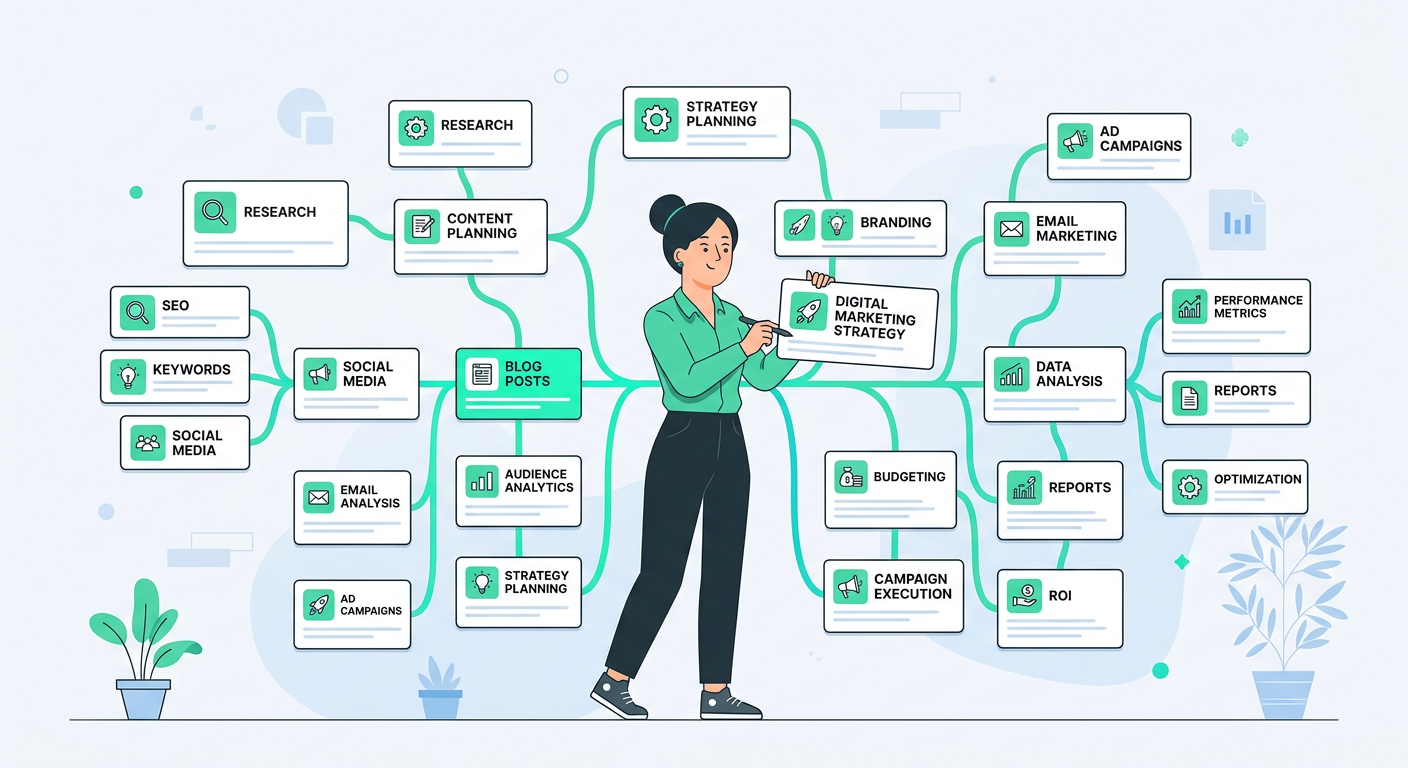
A topic map is a simple outline of the ideas your page should cover. You don’t need expensive software to create one. A spreadsheet, notes app, or whiteboard works fine.
Start with your main topic in the center. Then add related subtopics around it.
For a beginner semantic SEO article, your map might include:
- Keyword intent
- Related terms
- Entity SEO
- Topic clusters
- Pillar pages
- Internal linking
- Content gaps
- FAQs
- Schema basics
- AI visibility
- Content updates
Once you have the map, group related ideas together. That becomes your outline.
The Beginner Rule
If a subtopic helps the reader complete the task, include it. If it only exists to make the article look longer, cut it.
Good semantic SEO is complete, not bloated.
Step 4: Use Related Terms Naturally
Related terms help clarify meaning. If your article is about “apple,” words like fruit, orchard, recipe, and nutrition point to one meaning. Words like iPhone, MacBook, Tim Cook, and iOS point to another.
That’s the basic idea behind semantic relevance. Context removes confusion.
For SEO topics, related terms might include:
- Organic traffic
- SERP features
- Keyword clusters
- Content briefs
- Topic authority
- Internal links
- Structured data
- Featured snippets
- AI mentions
- Answer engine optimization
Don’t create a giant list and shove every phrase into your article. Use the terms that naturally belong in the explanation.
Step 5: Mention Relevant Entities
Entities are identifiable things, such as people, companies, products, places, frameworks, and concepts. In SEO content, entities might include Google, Bing, ChatGPT, Gemini, Claude, schema markup, WordPress, Shopify, Ahrefs, Semrush, and Screaming Frog.
Mentioning relevant entities helps clarify the world your content belongs to. It also makes your article more useful because readers often need names, tools, and examples to understand what to do next.
For beginners, the best approach is simple: name things clearly when they matter.
Don’t write “a popular analytics platform” if you mean Google Analytics. Don’t write “AI tools” if you specifically mean ChatGPT, Gemini, or Claude.
Step 6: Create a Better Outline
Most weak articles fail before the first draft. The outline is too shallow, so the article becomes shallow too.
A strong semantic outline usually includes:
- A direct definition
- Why the topic matters
- A step-by-step process
- Examples
- Common mistakes
- Tools or templates
- FAQs
- Next steps
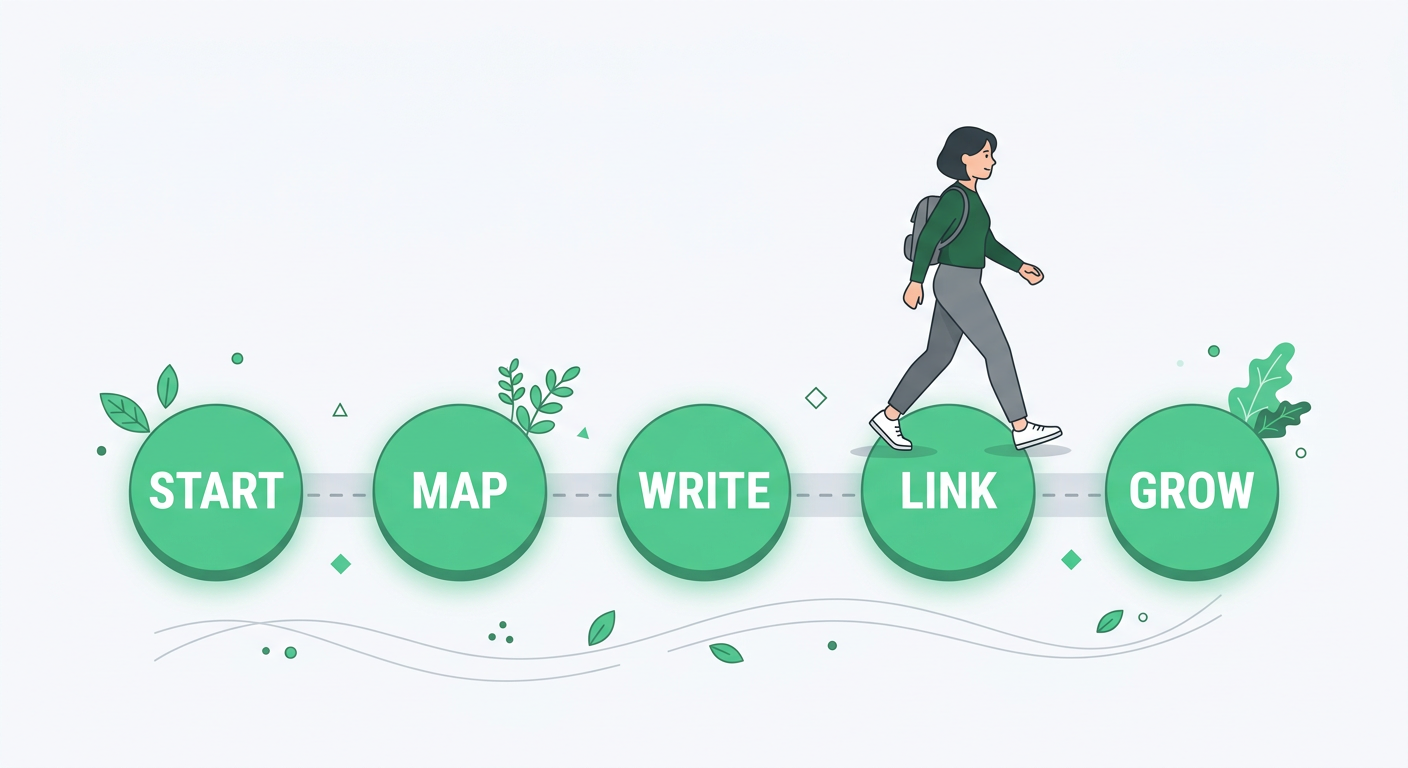
For this article, the outline follows the beginner journey: understand the concept, map the topic, write with context, connect pages, measure results, and improve over time.
That’s much better than randomly listing tips.
Step 7: Write Direct Answers First
Semantic SEO works best when each section answers a clear question. If your heading says “What Is Semantic SEO?” the first sentence should answer that question directly.
Then you can expand with examples, nuance, and details.
This structure helps readers skim, but it also helps AI tools understand your content. A clear answer near the top of a section is much easier to extract than an answer buried after five paragraphs of setup.
Try this format:
- Answer the question in one or two sentences.
- Explain why it matters.
- Give an example.
- Add a practical next step.
Simple wins.
Step 8: Build Internal Links Like a Topic Cluster
Internal links are one of the most underrated parts of semantic SEO. They connect related ideas and help readers move through your site in a logical way.
Think of your website like a library. If every article sits alone on a shelf with no signs, people get lost. If related articles point to each other, the whole site becomes easier to navigate.
For example, a semantic SEO guide can link naturally to pages about keyword tracking tools, topical authority, and a broader AI website audit. Those links help readers go deeper without feeling forced.
A Simple Internal Linking Pattern
Use this beginner pattern:
- Link from your broad guide to specific supporting articles.
- Link from supporting articles back to the broad guide.
- Link between closely related supporting articles.
- Use descriptive anchor text.
- Avoid stuffing links into every paragraph.
A good internal link should feel like a helpful recommendation, not an SEO chore.
Step 9: Add FAQs for Long-Tail Coverage
FAQs are great for semantic SEO because they capture real questions. They also help you cover related long-tail phrases without awkwardly forcing them into your main sections.
Good FAQ questions usually come from customers, sales calls, Google result pages, forums, support tickets, and your own analytics data.
For a beginner guide, FAQs should be practical. Avoid vague questions like “Is SEO important?” and use specific questions like “How many related terms should I include?”
Step 10: Measure What Happens After Publishing
Publishing is not the finish line. It’s the first version.
Track how your page performs over time. You want to know whether it earns impressions, gets clicks, ranks for related terms, attracts links, and supports conversions.
A tool like Marvlus keyword tracking can help you monitor which pages are moving up or down, which keywords are connected to each page, and where you should improve first.
Beginner-friendly metrics to watch include:
- Ranking position
- Organic clicks
- Impressions
- Click-through rate
- Time on page
- Conversions
- Internal links added
- Related keywords gained
Don’t panic over daily changes. Look for trends over weeks and months.
Common Semantic SEO Mistakes
Semantic SEO is simple, but it’s easy to overcomplicate. Here are the mistakes I see most often.
Writing for Algorithms Instead of People
If your article sounds like a robot wrote it for another robot, you’ve missed the point. Semantic SEO should make content more useful, not more awkward.
Use plain language. Explain terms. Give examples. Make the reader feel smarter, not overwhelmed.
Covering Too Many Topics on One Page
One page should have one main job. If you try to cover semantic SEO, technical SEO, local SEO, ecommerce SEO, and link building in one article, the page loses focus.
Depth beats sprawl.
Ignoring Internal Links
Even great content can underperform if it’s isolated. Add internal links from related pages, especially pages that already get traffic or have backlinks.
You’re building a connected system, not a pile of articles.
Copying Competitor Outlines Too Closely
Competitor research is useful, but copying the same outline as everyone else makes your content forgettable. Add your own examples, customer insights, screenshots, workflows, or opinions.
Your experience is part of the value.
Treating Semantic SEO Like Keyword Stuffing
Related terms are not magic dust. If a phrase doesn’t help the reader, leave it out.
The best semantic content feels natural because it follows the reader’s learning path.
A Beginner Semantic SEO Workflow
Here’s a practical workflow you can use for your next article.
Pick the Page Goal
Decide what the page should accomplish. Is it meant to educate, compare, convert, or support another page?
Write that goal at the top of your brief before you draft anything.
Choose the Main Topic
Pick one primary topic and one primary audience. “Semantic SEO for SaaS founders” is clearer than “SEO tips.”
Specificity makes writing easier and ranking more realistic.
List Subtopics and Questions
Write down every question the reader might ask before, during, and after learning the topic.
Then group those questions into sections.
Draft the Page
Write the clearest answer first. Add examples, steps, and supporting details after.
Don’t worry about perfection in the first draft. Focus on usefulness.
Add Links and Sources
Add internal links to relevant pages and external links to trustworthy data, studies, or official documentation.
This builds trust and gives readers a path to go deeper.
Update After Data Comes In
After a few weeks, review performance. Add missing sections, improve weak headings, update examples, and link from newer articles.
Semantic SEO compounds when you keep improving the cluster.
Strengthen Your SEO and AI Visibility
If you want a faster way to spot content gaps, improve page structure, and understand how your site looks to Google and AI platforms, try the free Marvlus AI website audit. It gives website owners, entrepreneurs, and marketers a plain-English view of what to improve next.
Use it before publishing a new content cluster, then run it again after updates so you can track progress without guessing.
Frequently Asked Questions
What is semantic SEO?
Semantic SEO is the practice of optimizing content around meaning, context, and topic relationships instead of only exact-match keywords. It helps your page explain a subject more completely, which can improve relevance for Google, AI answer tools, and readers.
Is semantic SEO good for beginners?
Yes. Beginners often benefit the most because semantic SEO gives content a clear structure. Instead of guessing how many keywords to use, you focus on answering real questions, covering related ideas, and linking helpful pages together.
How is semantic SEO different from regular SEO?
Regular SEO often focuses on keywords, titles, backlinks, and technical basics. Semantic SEO adds deeper context by including related terms, entities, intent, examples, topic clusters, and internal links. The two work best together.
How many related keywords should I use?
There’s no perfect number. Use related terms when they help explain the topic naturally. If you’re adding a phrase only because a tool suggested it, but it doesn’t help the reader, skip it.
Do I need a topic cluster for every article?
No. Some pages can stand alone. But important topics should usually become clusters because one article rarely answers every related question. A cluster helps you build depth over time.
Can semantic SEO help with AI visibility?
Yes, it can help. AI answer tools tend to favor content that is clear, structured, specific, and easy to summarize. Semantic SEO supports that by improving definitions, context, headings, FAQs, and entity clarity.
How long does semantic SEO take to work?
It depends on your site authority, topic difficulty, content quality, and publishing consistency. For early-stage sites, expect progress over months, not days. The key is to publish focused content, connect it well, and keep improving it.
Final Thoughts
Semantic SEO is not about sounding technical. It’s about being genuinely useful in a structured way.
If you’re a beginner, start with one focused topic, map the questions around it, write clear answers, mention relevant entities, and connect related pages with smart internal links. Do that consistently, and your website becomes easier for people, Google, and AI answer tools to understand.
That’s the real win: not just more content, but a clearer, more helpful website that earns attention over time.