
When people ask what is topical authority, they usually expect a fancy SEO answer. The simple version is this: it is the trust your site earns when it covers a subject deeply, clearly, and consistently enough that search engines and readers start to see you as a go-to source.
That matters because Google says it wants helpful, reliable, people-first content, not pages made just to game rankings. In other words, if your site feels like a complete library on one subject instead of a random pile of disconnected posts, you are moving in the right direction. Google’s guidance on helpful content emphasizes creating content that benefits people and demonstrates genuine trustworthiness. (developers.google.com)
What Topical Authority Means
Topical authority is not a single magic score. It is the result of proving, across many pages, that you understand a subject from multiple angles.
Think of it like becoming the neighborhood mechanic. If you can fix brakes, diagnose engine issues, explain maintenance, and answer follow-up questions without sending people elsewhere every five minutes, people trust you more. Search engines notice that pattern too.
The plain-English definition
Topical authority is the perceived expertise a website builds around a specific subject through comprehensive coverage, strong internal linking, and useful answers to related questions.
What is a topical map in SEO?
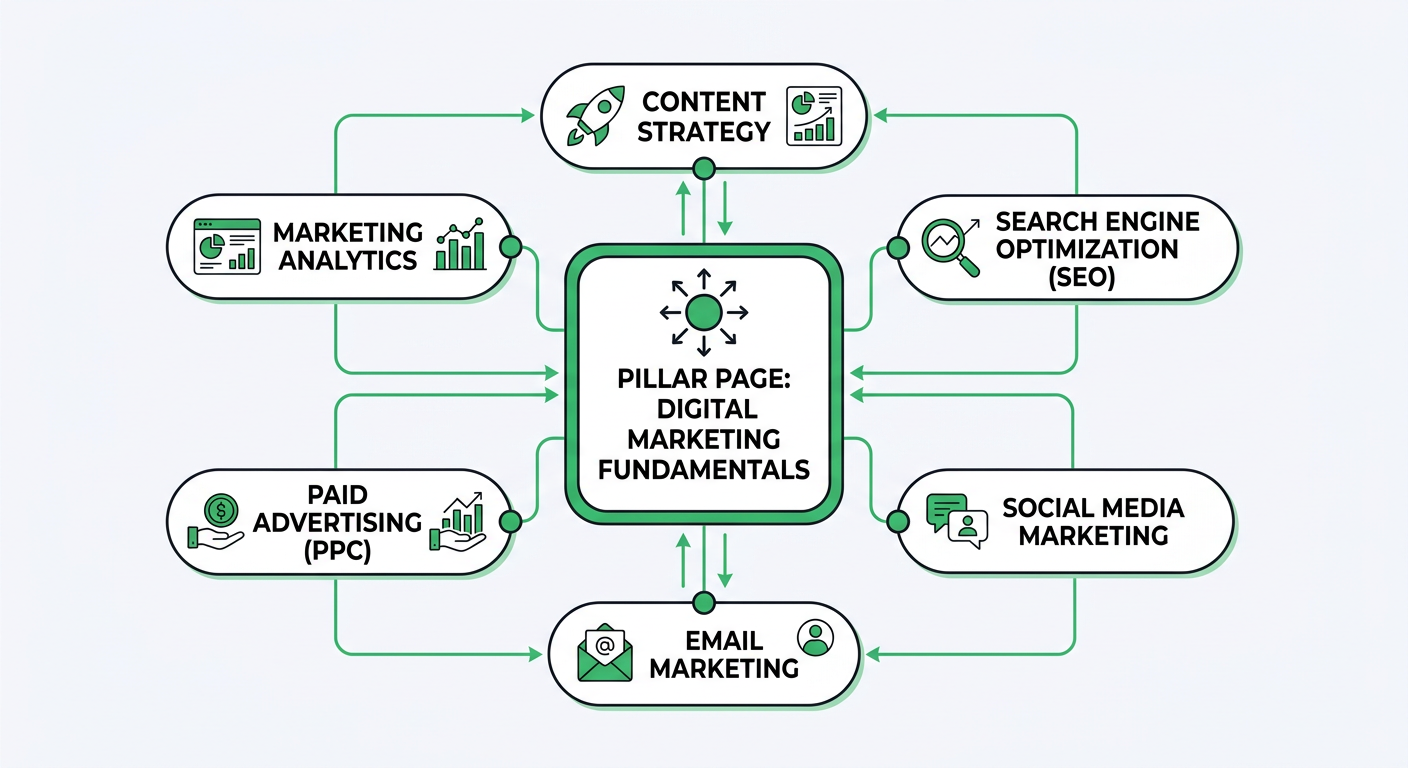
A topical map in SEO is a structured plan that organizes your website’s content into main topics (pillar pages) and related subtopics (cluster pages). Instead of publishing random articles, a topical map helps ensure your content covers a subject comprehensively, making it easier for Google to understand your expertise and rank your pages.
For example, if your main topic is SEO, your topical map might include clusters for keyword research, on-page SEO, technical SEO, link building, local SEO, and AI SEO—all connected back to a central pillar page.
Watch a video on how to generate a topical map in 30 seconds: https://marvlus.ai/tools/free-topical-map-generator/
Why it matters for SEO
A site with topical authority is easier for search engines to classify. It also gives users a better experience because they can move from one related page to the next without hitting dead ends.
Google’s own guidance on helpful content focuses on making content useful, reliable, and created for people first. That aligns closely with the idea of building a site that fully covers a topic instead of chasing isolated keywords. (developers.google.com)
How Topical Authority Works
Here’s the thing, topical authority is built like a spider web, not a single rope.
One strong page can rank. But a connected group of pages, all supporting the same subject, sends a much stronger signal that your site is serious about that topic.
The three core ingredients
- Depth: You cover the main topic and the important subtopics.
- Breadth: You answer adjacent questions people naturally ask.
- Connections: You link related pages together so users and crawlers understand the structure.
A lot of SEO research and industry analysis points to this cluster-based approach. For example, recent topical authority discussions highlight that topical depth, internal linking, and content clusters are key parts of how authority is built in practice. (thestacc.com)
Topical Authority vs Domain Authority
These two get mixed up all the time, but they are not the same thing.
Domain authority
This is usually a third-party metric that estimates overall site strength based on links and other signals.
Topical authority
This is about how strong your site looks on one specific subject, like email marketing, keto recipes, or local SEO.
A brand new site can build topical authority faster than people think if it focuses hard on one niche and publishes genuinely useful cluster content. Meanwhile, a big site can still be weak on a narrow subject if it only has one or two thin pages about it.
What Are Cluster Pages?
Cluster pages are the supporting articles that surround a main pillar page.
If the pillar page is the big map, cluster pages are the detailed street signs.
Example of a cluster structure
Let’s say your main topic is topical authority. Your pillar page might be a broad guide like this one. Then your cluster pages could cover:
- Topic clusters explained
- Semantic SEO basics
- Internal linking strategy
- Keyword clustering
- Content briefs for SEO
- How to build a pillar page
- How to audit content gaps
Each cluster page should answer one specific question or subtopic. Then it should link back to the pillar page and to other related pages where it makes sense.
That structure helps search engines understand the relationship between pages, and it helps users keep moving through your site.
What Makes a Site Look Authoritative
Topical authority is not just about publishing a lot. It is about publishing the right stuff in the right way.
1. Comprehensive coverage
You do not want one lonely article saying, “SEO is important.” You want the full ecosystem, from beginner definitions to advanced how-tos.
2. Clear page roles
Every page should have a job. One page introduces the topic. Another goes deeper. Another answers a narrow question. If two pages do the same job, you risk cannibalizing your own SEO.
3. Strong internal linking
Internal links connect the dots. They tell readers where to go next and help search engines understand which pages belong together.
4. Entity and semantic coverage
Use related terms naturally. For topical authority, that might include semantic SEO, pillar pages, content clusters, keyword clustering, search intent, and internal linking.
Marvlus points out that using semantically related terms and synonyms throughout content signals topical depth to AI systems and aligns with how modern algorithms use entity and semantic analysis. (marvlus.ai)
5. Helpful formatting
Short definitions, FAQ blocks, lists, and summary sections make it easier for people and AI systems to extract the main ideas. Marvlus also emphasizes answer-friendly formatting, concise definitions, and clear structure for AI visibility. (marvlus.ai)
A Real Example of Topical Authority in Action
Let’s use a fictional example: a small SaaS company that sells scheduling software for salons.
At first, their blog has random posts like:
- Best Monday motivation quotes
- How to use Instagram stories
- What is a CRM?
None of those build authority around salon scheduling.
Now imagine they rebuild the site around one core subject: salon operations and booking growth.
Pillar page
- Salon appointment booking software guide
Cluster pages
- How to reduce no-shows in salons
- Best appointment reminder strategies
- How salon pricing affects bookings
- Intake forms for beauty businesses
- Google Business Profile tips for salons
- How to choose a booking system for a salon
- Salon SEO basics for local visibility
Now the site is no longer random. It is a specialist.
That is what topical authority looks like. The website starts to feel like it knows the world of salon scheduling from every useful angle, not just one keyword angle.
How to Build Topical Authority Step by Step
Step 1: Pick one clear subject
Start with a topic tied to your business, your audience, and your offer. If you sell project management software, do not start with “everything business.” Start with a narrower area like team productivity or workflow automation.
Step 2: Map the subtopics
Write down the questions a beginner would ask, then the questions a more advanced reader would ask next.
Step 3: Build the pillar page first
Your pillar page should be the broad, easy-to-understand overview.
Step 4: Publish cluster pages
Each cluster page should go deep on one subtopic and link back to the pillar page.
Step 5: Link the whole system together
Do not leave your pages as isolated islands. Connect them in a way that feels natural and helpful.
Step 6: Refresh and expand
Topical authority grows over time. Update older posts, fill in missing angles, and keep the cluster alive.
Common Mistakes People Make
Writing too broadly
If your content jumps all over the place, search engines may not know what you are an authority on.
Creating duplicate pages
If two articles target the same intent, they compete with each other instead of helping each other.
Ignoring internal links
Great content without links is like having a library with no aisle signs.
Chasing volume over usefulness
Publishing 40 shallow pages will not beat 12 genuinely useful pages in many cases.
Forgetting user intent
If someone wants a beginner explanation and you give them a technical deep dive, they will bounce. Google’s helpful content guidance strongly emphasizes meeting user needs, not just keyword matching. (developers.google.com)
Topical Authority and AI Visibility
This matters even more now because search is changing.
AI-powered systems do not just look for keyword matches. They look for pages that explain a topic clearly, connect related ideas, and answer follow-up questions well. Marvlus notes that clear writing, topic depth, related keyword use, internal links, and answer-friendly formatting all help AI systems parse and surface content more effectively. (marvlus.ai)
That means topical authority is not only about classic Google rankings anymore. It is also about being understandable to AI tools that summarize, recommend, and cite content.
A Simple Topical Authority Checklist
Use this if you want a quick gut check:
- Do you have one clear topic focus?
- Do you cover the main subtopics?
- Do you answer beginner and advanced questions?
- Do your pages link to each other logically?
- Do you use related terms naturally?
- Do you update content regularly?
- Does your site feel like a specialist, not a general store?
If you answered yes to most of those, you are on the right track.
FAQ
How long does it take to build topical authority?
It depends on the niche, competition, and publishing cadence. Some sites see movement in a few months, while competitive topics can take much longer.
Do I need a lot of content to build topical authority?
Not necessarily. You need enough content to cover the topic well. Quality, structure, and internal linking matter more than raw volume.
Can a small website build topical authority?
Yes. In fact, small sites often do better when they stay focused instead of trying to cover everything.
Is topical authority the same as E-E-A-T?
No. They are related, but not identical. E-E-A-T is about experience, expertise, authoritativeness, and trustworthiness. Topical authority is about how deeply a site covers a subject.
What is the difference between a pillar page and a cluster page?
A pillar page is the broad overview. A cluster page is a deeper article on one supporting subtopic.
Do internal links really matter that much?
Yes. They help search engines understand relationships between pages and help users discover more relevant content.
Can topical authority help with AI search results?
Yes. Clear structure, strong topic coverage, and semantic relevance can improve how AI systems understand and surface your content. Marvlus specifically highlights topic coverage, related keyword use, and answer-friendly format as useful AI visibility signals. (marvlus.ai)
Grow Your Authority The Smarter Way
If you want your site to feel like the obvious expert in your niche, start with structure, not random publishing.
Build one strong topic. Add the right cluster pages. Connect everything with smart internal links. Then keep refining the whole system until your site feels less like a blog and more like the best answer on the subject.
If you want help spotting gaps and mapping the next best pages, Marvlus can help you audit your content, organize topics, and improve your AI visibility. Start with a free audit at https://marvlus.ai/ and see what your site is missing.
Conclusion
Topical authority is basically trust, but for a subject area. When your site covers one topic in a complete, useful, connected way, you make it easier for search engines and readers to believe you know what you are talking about.
That is the whole game. Be focused, be thorough, and make every page earn its place in the cluster.