
A lot of people think SEO ends when you hit page one. It doesn’t. These days, the real game is also about whether AI tools understand your brand well enough to mention, summarize, and recommend it.
That is where generative engine optimization comes in. It’s the practice of shaping your content so AI-powered systems, like ChatGPT-style assistants, Google’s AI experiences, and other answer engines can easily interpret it and use it in responses.
If you run a website, sell services, or publish content, this matters more than ever. You’re no longer optimizing only for clicks, you’re optimizing for visibility inside the answers people see first.
What Is Generative Engine Optimization?
Generative engine optimization, often shortened to GEO, is the process of making your content easier for AI systems to find, understand, trust, and include in generated answers. In simple terms, you want your site to become a source that AI can confidently reference when someone asks a question.
Think of it like this, traditional SEO is about getting your page ranked. GEO is about getting your ideas picked up by the machine that writes the answer.
That means your content needs more than keywords. It needs clarity, structure, topical depth, helpful definitions, and strong signals that show your site is a reliable source.
Why Generative Engine Optimization Matters Now
Search is changing fast. People are asking AI tools full questions instead of typing short keyword phrases, and those tools often return a single summarized answer instead of a long list of links.
That creates a big shift for website owners and marketers. If your content is not easy for AI to parse, you may still rank in Google, but miss visibility in AI-generated answers where users are making decisions.
Marvlus describes this shift as improving both SEO and AI visibility, which is a good way to think about it. You are not just trying to please a search engine anymore, you are trying to be understood by an answer engine too. (marvlus.ai)
How GEO Is Different from Traditional SEO
Traditional SEO still matters, a lot. But GEO changes the focus from just ranking signals to answer readiness.
Traditional SEO focuses on:
- Keyword targeting
- Backlinks
- Page speed
- Technical health
- Search rankings
GEO focuses on:
- Clear answers to common questions
- Semantic relevance and topic depth
- Entity recognition, like brands, tools, people, and concepts
- Structured formatting that AI can extract quickly
- Trust signals that make your content worth citing
The easiest way to think about it is this, SEO gets you into the library. GEO gets you quoted by the librarian.
What AI Systems Look For
AI systems favor content that is easy to summarize and hard to misunderstand. Based on Marvlus’s own AI visibility guidance, some of the biggest signals include related keyword use, key name detection, topic coverage, schema, search intent match, answer-friendly formatting, internal links, and freshness. (marvlus.ai)
1. Clear definitions
If you define terms well, AI can pull those definitions into answers more easily.
2. Strong topical depth
Thin content gets skipped. Comprehensive content gets noticed.
3. Entity-rich language
Naming relevant tools, brands, concepts, and categories helps AI understand what your page is actually about.
4. Straightforward structure
Headings, bullets, FAQs, and short summary paragraphs make extraction much easier.
5. Fresh and accurate information
Outdated content hurts trust, especially in fast-changing topics like search and AI.
The Core Building Blocks of Generative Engine Optimization
If you want to improve generative engine optimization, start with these basics.
Create answer-first content
Don’t bury the answer in paragraph five. State the answer early, then explain it.
Cover the topic completely
Answer the main question, then cover the related questions users are likely to ask next.
Use natural language
People ask AI in conversational language, so write like a human being, not a keyword machine.
Add structured sections
FAQs, lists, step-by-step instructions, and clear subheadings are all GEO-friendly.
Support claims with sources
When relevant, link to authoritative sources like Google Search Central or trusted industry research. That helps reinforce credibility.
Strengthen internal linking
Internal links help search engines and AI systems understand how your content fits together. If you run a site like Marvlus, pages such as the about page and agency page can help create a stronger topical ecosystem. (marvlus.ai)
A Simple GEO Strategy for Early-Stage Businesses
If you’re a small business, blogger, or founder, you do not need a giant content team to get started. You need a clean system.
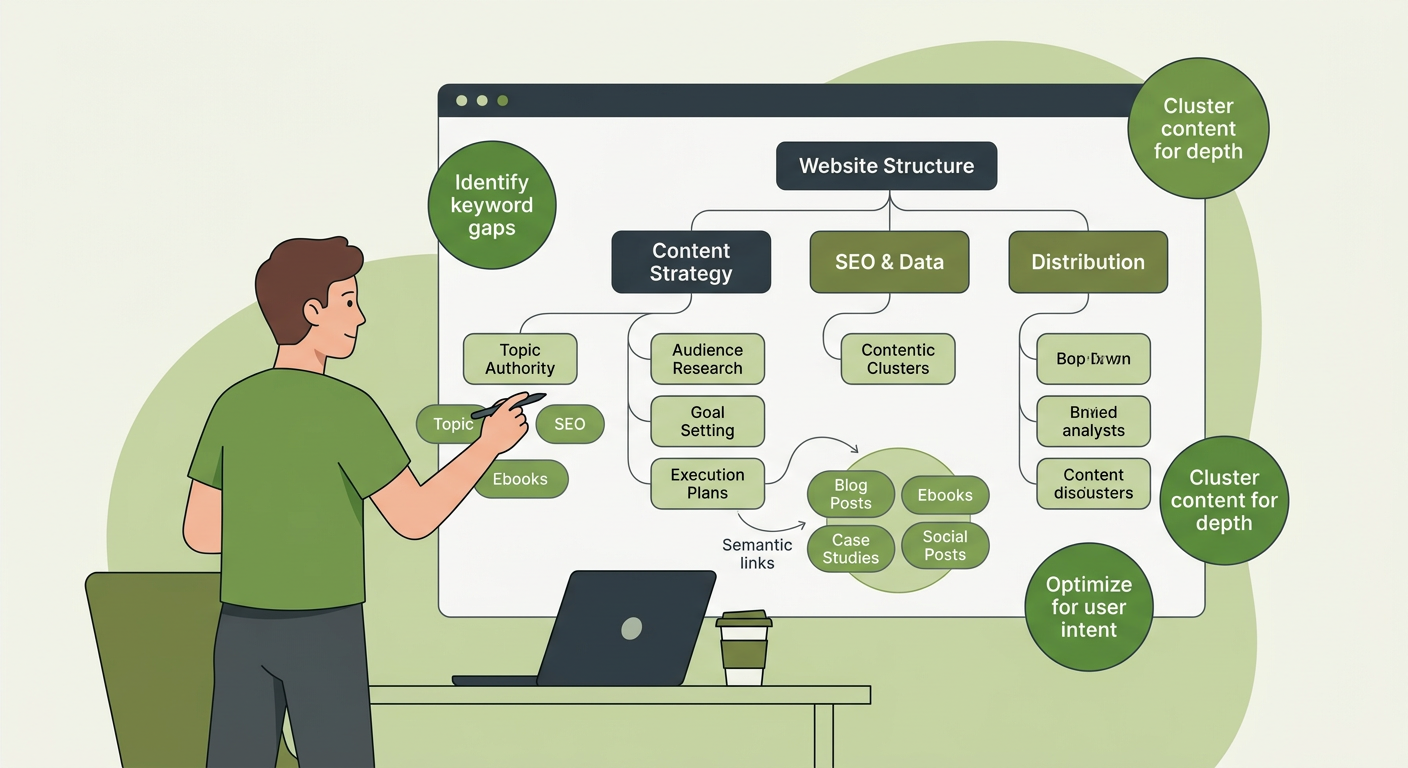
Step 1: Pick one topic cluster
Choose one subject area where you want to be known. For example, AI visibility, local SEO, eCommerce SEO, or content marketing.
Step 2: Build a strong pillar page
Create one detailed page that answers the main question and links to supporting articles.
Step 3: Publish supporting pages
Write pages for related questions, comparisons, definitions, and how-to content.
Step 4: Add FAQ sections
These are gold for AI visibility because they mirror the way people ask questions.
Step 5: Refresh content regularly
Update stats, examples, and recommendations so your content stays relevant.
Step 6: Audit what’s working
Tools that check AI visibility and SEO signals, like Marvlus, can help you see where your content is strong and where it needs work. (marvlus.ai)
What Good GEO Content Looks Like in Practice
Here’s the thing, GEO content does not have to sound robotic. In fact, the best content is usually the most human.
A strong GEO page often includes:
- A direct definition near the top
- Short paragraphs with one idea each
- Helpful examples
- Clear headings that match real questions
- A FAQ section
- Useful external sources
- Internal links to related pages
Marvlus also emphasizes content structure, keyword-topic mapping, and clear writing as important AI visibility signals, which lines up well with this approach. (marvlus.ai)
Common Mistakes to Avoid
A lot of people accidentally make GEO harder than it needs to be.
Stuffing keywords
AI systems are smarter than that. Use natural language instead.
Writing vague content
If your page sounds like it was written by a committee, AI may ignore it.
Ignoring FAQs
You’re missing an easy opportunity if you skip them.
Publishing thin pages
A short page with no depth is unlikely to become a trusted answer source.
Forgetting trust signals
Author bios, source links, fresh updates, and clear branding all help.
How Marvlus Fits Into GEO
Marvlus is built around improving AI visibility and SEO together, which makes it a useful example of how this space is evolving. The platform focuses on audits, keyword-topic mapping, competitor research, content automation, and agency tools. (marvlus.ai)
For early-stage businesses, that matters because GEO is not just about theory. It’s about action. You need to know what to fix first, what content to build next, and how to measure whether your brand is showing up in AI-driven experiences.
FAQ
Is generative engine optimization the same as SEO?
Not exactly. SEO focuses on ranking in search engines, while GEO focuses on being selected, summarized, or cited by AI answer engines. They overlap, but they are not identical.
Do I still need keywords for GEO?
Yes, but not in the old-school stuffing way. Keywords still help with relevance, but GEO depends more on topic depth, intent match, and clear explanations.
What kind of content works best for GEO?
Content that answers questions directly usually performs well. Think definitions, guides, comparisons, FAQs, tutorials, and thought leadership that is easy to summarize.
Can small businesses use GEO effectively?
Absolutely. In fact, smaller businesses can move faster than large brands. If you publish clear, useful content around a focused topic, you have a real shot at becoming an AI-cited source.
Does GEO replace Google SEO?
No. It expands your strategy. Google rankings still matter, but AI visibility adds a new layer of discovery you cannot ignore.
How do I know if my content is GEO-friendly?
Check whether your content has clear headings, concise answers, topic depth, reliable sources, and natural language. If you want a faster path, run an AI-focused audit and review the gaps.
Where should I start if I’m new to this?
Start with one important page on your site. Rewrite it so it answers one major question clearly, then build supporting content around it.
Ready to Improve Your AI Visibility?
If you want your site to show up in both search results and AI-generated answers, now is the time to start. The good news is you do not need to rebuild everything at once, you just need a smarter content system.
Start with one page, one topic, and one clear answer. Then keep stacking useful content around it. If you want help spotting the biggest gaps, explore Marvlus and see how an AI visibility audit can point you in the right direction.
Conclusion
Generative engine optimization is basically the next layer of search visibility. Instead of only asking, “Will Google rank this page?”, you also ask, “Will AI understand it, trust it, and use it?”
That shift rewards clarity, depth, structure, and credibility. If you build content that helps both humans and machines, you’re not just keeping up, you’re getting ahead.